

Showing posts with label Chazon Ish. Show all posts
Showing posts with label Chazon Ish. Show all posts
Tuesday, August 13, 2013
Thursday, August 9, 2012
Yitzchak Navon Relates More Of The Famous Ben-Gurion and Chazon Ish Meeting
There is a story told of what has become the famous meeting between Prime Minister David Ben-Gurion and the Chazon Ish, Rav Avraham Yeshaya Karelitz.
The story I always heard is that Ben-Gurion went to Bnei Braq to talk to the Chazon Ish about the serious matters that were diving the Israeli government and the Haredi community, specifically about the yeshiva students and army service. Ben-Gurion asked the Chazon Ish how the two communities could find a way to live together. the Chazon Ish responded, by quoting from the the gemara in Sanhedrin: “If two camels met each other while on the ascent to Beth-Horon … How then should they act? If one is laden and the other unladen, the latter should give way to the former.”, and went on to say that the haredi community has a camel (or wagon, in some versions) that is burdened down with a full package of tradition and customs while the camel of the secular community is bearing no package, no burden, and therefore preference should be given to the haredi community.
That is all I ever heard of the story relating the conversation. That and that when Ben-Gurion left the house of the Chazon Ish he was asked his impression of the rav and Ben Gurion responded that he was impressed with the Chazon Ish's wisdom, and that he had never met anyone as wise as he. That is it. That was the story, as I always heard it, though it always seemed strange to me that the meeting was so short..
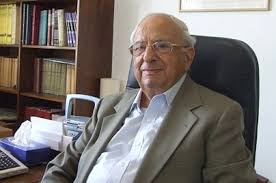 Interestingly, there is really more to the story than that. Former President of Israel Yitzchak Navon was also present at the famous meeting between the two giants. He is supposedly the last person alive who was there.
Navon was recently interviewed about his recollection of the meeting, and he describes the conversation vividly. You can listen to the audio of the interview on Ladaat. I found it fascinating.
The story goes, as recounted by Yitzchak Navon, that they went into the house and it was a small house with a lot of books. He describes the conversation as the story above, but that is only the beginning of the conversation. After the Chazon Ish made his comment about the camels and the burden of tradition of the haredi community, Ben Gurion responded by saying "You think this camel, tapping himself on the shoulder referring to the secular community, has no burden? Settling the land, absorbing immigrants, etc. that is nothing? These are not mitzvot?
The Chazon Ish then responded that all that is in the merit of us learning torah. Because of us, you can do everything that you are doing.
Ben Gurion then asked, those who sit on the borders and guard over you, that is not a mitzva? The Chazon Ish responded that they exist because we are here learning Torah. Ben Gurion said that without them the enemy would slaughter you if those soldiers would not be there protecting you, to which the Chazon Ish responded that it is in the merit of our learning Torah that they are able to work and guard the borders. Ben Gurion then said that he does not denigrate the value of learning torah, but if nobody would be alive [RG: ostensibly because the enemy would invade and kill everyone, if everyone was busy learning torah and not defending the borders], who would be able to learn torah? The Chazon Ish responded that torah is the source of life - etz chaim hee.
They went on to talk about the rampant desecration of Shabbos. the Chazon Ish said that he sees chillul shabbos everywhere. People travel to the sea instead of learning torah. It is shocking and upsetting to see in the holy land this type of chillul shabbos. Ben Gurion responded that he himself does not travel to the sea on Shabbos but laborers, who work all week, they shouldn't be allowed to go to the beach on shabbos? We cannot force them if they do not want to learn torah, but they too are Jews. If they do not go to the beach, do you think they will go to shul? The Chazon Ish responded saying that he believes the day will come when everyone [in Israel] will keep Shabbos and daven. Ben Gurion then said that if they want to, he is not opposed to it, but there should not be religious coercion and there should not be anti-religious coercion.
They then parted ways with a warm handshake, and after they left Ben Gurion is quoted commenting on the Chazon Ish's wisdom, and the Chazon ish is quoted commenting that Ben Gurion is person with a neshama gedola.
Navon also says that while some say the discussion took place in yiddish, that is incorrect, and the entire discussion took place in Hebrew.
The rest of the story, beyond what is normally related, is just as fascinating as the beginning of the story.
---

The story I always heard is that Ben-Gurion went to Bnei Braq to talk to the Chazon Ish about the serious matters that were diving the Israeli government and the Haredi community, specifically about the yeshiva students and army service. Ben-Gurion asked the Chazon Ish how the two communities could find a way to live together. the Chazon Ish responded, by quoting from the the gemara in Sanhedrin: “If two camels met each other while on the ascent to Beth-Horon … How then should they act? If one is laden and the other unladen, the latter should give way to the former.”, and went on to say that the haredi community has a camel (or wagon, in some versions) that is burdened down with a full package of tradition and customs while the camel of the secular community is bearing no package, no burden, and therefore preference should be given to the haredi community.
That is all I ever heard of the story relating the conversation. That and that when Ben-Gurion left the house of the Chazon Ish he was asked his impression of the rav and Ben Gurion responded that he was impressed with the Chazon Ish's wisdom, and that he had never met anyone as wise as he. That is it. That was the story, as I always heard it, though it always seemed strange to me that the meeting was so short..
Navon was recently interviewed about his recollection of the meeting, and he describes the conversation vividly. You can listen to the audio of the interview on Ladaat. I found it fascinating.
The story goes, as recounted by Yitzchak Navon, that they went into the house and it was a small house with a lot of books. He describes the conversation as the story above, but that is only the beginning of the conversation. After the Chazon Ish made his comment about the camels and the burden of tradition of the haredi community, Ben Gurion responded by saying "You think this camel, tapping himself on the shoulder referring to the secular community, has no burden? Settling the land, absorbing immigrants, etc. that is nothing? These are not mitzvot?
The Chazon Ish then responded that all that is in the merit of us learning torah. Because of us, you can do everything that you are doing.
Ben Gurion then asked, those who sit on the borders and guard over you, that is not a mitzva? The Chazon Ish responded that they exist because we are here learning Torah. Ben Gurion said that without them the enemy would slaughter you if those soldiers would not be there protecting you, to which the Chazon Ish responded that it is in the merit of our learning Torah that they are able to work and guard the borders. Ben Gurion then said that he does not denigrate the value of learning torah, but if nobody would be alive [RG: ostensibly because the enemy would invade and kill everyone, if everyone was busy learning torah and not defending the borders], who would be able to learn torah? The Chazon Ish responded that torah is the source of life - etz chaim hee.
They went on to talk about the rampant desecration of Shabbos. the Chazon Ish said that he sees chillul shabbos everywhere. People travel to the sea instead of learning torah. It is shocking and upsetting to see in the holy land this type of chillul shabbos. Ben Gurion responded that he himself does not travel to the sea on Shabbos but laborers, who work all week, they shouldn't be allowed to go to the beach on shabbos? We cannot force them if they do not want to learn torah, but they too are Jews. If they do not go to the beach, do you think they will go to shul? The Chazon Ish responded saying that he believes the day will come when everyone [in Israel] will keep Shabbos and daven. Ben Gurion then said that if they want to, he is not opposed to it, but there should not be religious coercion and there should not be anti-religious coercion.
They then parted ways with a warm handshake, and after they left Ben Gurion is quoted commenting on the Chazon Ish's wisdom, and the Chazon ish is quoted commenting that Ben Gurion is person with a neshama gedola.
Navon also says that while some say the discussion took place in yiddish, that is incorrect, and the entire discussion took place in Hebrew.
The rest of the story, beyond what is normally related, is just as fascinating as the beginning of the story.
---
כשבן גוריון פגש את החזון איש -הנשיא נבון משחזר
דוד בן גוריון ויצחק נבון. צילום: לע"מ
נשיא המדינה החמישי, יצחק נבון, ששימש כמזכירו של ראש הממשלה הראשון דוד בן גוריון, משחזר בראיון מיוחד לחיים וייס ב'קול הציבור', את הפגישה שהייתה במעונו של החזון איש, מה דיברו שם והדיאלוג שהיה בחדר הצנוע והקטן. האזינו.
נשיא המדינה החמישי, יצחק נבון, ששימש כמזכירו של רה"מ הראשון דוד בן גוריון, משחזר את פגישת מרן החזון איש זצוקל"ה ורה"מ הראשון דוד בן גוריון, שדנו בגיוס בחורי ישיבות.
הרעיון מספר נבון, נולד אצל בן גוריון שביקש מזלמן כהנא ובנימין מינץ ז"ל, לבקש היפגש עם בן גוריון. "זו הייתה דירה קטנה וצנועה בבני ברק, ואלפים התאספו מסביב לבית". החזון איש קיבל אותנו בסבר פנים יפות, ובן גוריון והחזון איש ישבו משני צידי השולחן והסתכלו זה על זה".
"בן גוריון פתח ואמר, באתי אליך לשאול אותך איך נוכל בארץ לחיות יהודים דתיים ויהודים שאינם דתיים, מבלי שנתפוצץ מבפנים. יש לנו השקפות שונות, איך נחיה יחד? החזון איש ענה לו שיש הלכה שאם שני גמלים צועדים במשעול אחד - זה מול זה, ויש מקום רק לאחד מהם, אז הגמל שיש עליו משא, יש לו זכות קדימה. הגמל שאין עליו משא יפנה את הדרך לשני".
"אנחנו כמו אותו גמל מלא במשא של מצוות שמוטלות עלינו, ואתם צריכים לפנות לנו את הדרך" אמר החזון איש. בן גוריון השיב: אתה חושב שהגמל הזה (והכה בכתפו על עצמו) אין לו משא? ההתיישבות, קליטת העלייה, זה לא משא? זה לא מצוות?"
"החזון איש השיב, זה בזכות זה שאנו לומדים תורה, אתם יכולים לעשות את מה שאתם עושים. בן גוריון השיב בשאלה: "אלו שיושבים בגבולות ושומרים עליכם, זו לא מצווה? החזון איש השיב: "בזכות זה שאנו לומדים תורה הם מתקיימים. אם הם לא היו מגינים עליכם אז האויבים היו שוחטים אתכם. בזכות זה שאנו לומדים תורה הם יכולים לעבוד ולשמור". אמר בן גוריון איני מזלזל בתורה, אבל אם לא יהיו אנשים חיים מי ילמד תורה, אז ענה החזון איש עץ חיים היא".
בהמשך החזון איש דיבר על חילול השבת. "אני רואה חילול שבת. אנשים נוסעים לים במקום ללמוד תורה, זה מקומם וזה מזעזע את הנפש לראות בארץ אבותינו חילול שבת כזה. בן גוריון השיב כי הוא לא נוסע בשבת לים, אבל אם אלו פועלים שעובדים כל השבוע לא מגיע להם לטבול בשבת? אי אפשר להכריח אותם אם אינם רוצים ללמוד תורה אבל גם הם יהודים. ואם הם לא יילכו לים אתה חושב שיבואו לבית הכנסת?" על כך השיב החזון איש, אני מאמין שיום יבוא וכולם ישמרו שבת ויתפללו. בן גוריון: אם ירצו לא אתנגד, אבל לא צריכה להיות כפייה דתית ולא כפייה אנטי דתית.
בהמשך ניגשו אל ארון הספרים שהיה בחדר והתבוננו בספרים, ולבסוף נפרדו בלחיצת ידיים ובידידות. כשיצאנו מספר הנשיא לשעבר נבון, אמר לי ברכב בן גוריון איזה יהודי יפה וחכם. מניין כוחו והשפעתו?" לדברי נבון גם כאשר יצא בן גוריון אמר החזון איש כי יצא איש עם נשמה גדולה.


Tuesday, November 15, 2011
IDF commanders not concerned about 'religious radicalism'
 We've heard a lot of stories lately about how the IDF is having 'problems' with religious soldiers because of an incident involving women singing. In fact, on Monday, Haaretz (probably the most anti-religious newspaper among the dailies in Israel) reported that 19 commanders had sent a letter to the IDF warning of 'religious radicalism.' But JPost reports that those 19 are unusual and most IDF commanders don't see a problem.
The growing media focus on the story has forced Chief of General Staff Lt.-Gen. Benny Gantz to order the Manpower Directorate to conduct a thorough review of the integration of women in the IDF.And the IDF is looking to recruit more ultra-Orthodox soldiers for whom mixing with women is not an issue: There are no women in or near their units.
“This is an issue that needs clarification, and until Gantz sets new guidelines the situation will likely get worse,” one officer explained.
The prominence of Orthodox officers in the army has been growing in recent years. In the Golani Brigade, for example, the brigade commander, a colonel, is religious, and out of the seven lieutenant-colonels, all but one are religious.
In the Paratroop Brigade, the situation is vastly different. There, the brigade commander and all but one of the lieutenant-colonels are secular, although all of the deputy battalion commanders – who can be called “battalion commanders to be” – are mostly Orthodox.
Nevertheless, brigade commanders in the IDF are generally dismissive of the claims that the army is undergoing religious radicalization.
Two brigade commanders, in conversations with The Jerusalem Post, said that they believed the phenomenon was marginal and was not indicative of the general religious population in the IDF.
“These appear to be isolated cases,” one brigade commander said last week. “People have to be smart, and that includes rabbis who are educating these soldiers, and commanders who are in charge of them. We have to know what we can do and what we can’t do.”
Another brigade commander said that he did not look under the helmets of his subordinates when considering them for promotions and appointments.
“Soldiers need to be judged according to the way they fight and how they are as leaders,” the brigade commander said.
While the relationship between Orthodox and female soldiers will continue to be examined, the IDF is looking to increase the number of ultra-Orthodox soldiers it recruits. There are currently about 2,000 ultra-Orthodox soldiers in the army, in the Netzah Yehuda Battalion – also known as Nahal Haredi – and in technical positions in the air force, the C4I (command, control, communications, computers, and (military) intelligence) Directorate and Military Intelligence.Shortly after the State was established, its first Prime Minister, David Ben Gurion, met with Rabbi Avraham Yeshayahu Karelitz, popularly known as the Chazon Ish, who was the leader of the ultra-Orthodox community of the time. Karelitz made Ben Gurion a simple offer: If Ben Gurion made the army all male, Rabbi Karelitz would order all the yeshiva boys to serve in the army. Ben Gurion refused, and the rest is history.
That number is expected to grow over the coming year, with plans by Military Intelligence, for example, to reach 1,000 ultra- Orthodox recruits as programmers and computer specialists. The funding for the enlistment of ultra-Orthodox soldiers is provided by the Treasury and is independent of the IDF’s budget.
Friday, November 11, 2011
The Chazon Ish zt”l, On His Yahrtzeit, Tomorrow, 15 Cheshvan, By Rav Aaron Brafman
 By Rav Aaron Brafman
There is ever so much that one can learn from a close association with great men. Our Chazal tell us that one can benefit greatly from absorbing their teachings, but one can gain even more from observing them in their day-to-day activities. How edifying would it have been, then, to have been granted the privilege of spending days, or even hours, in the presence of a Chofetz Chaim, a Lubliner Rav, or a Chazon Ish!
While the opportunity for such first-hand associations has been the privilege of only a select few, some knowledge of the personal habits and the private thoughts of great personalities is still available - long after their passing - through their writings. The Chazon Ish, of blessed memory, is very much revealed as a distinct individual of commanding countenance through his talmudic commentaries and discussions, his halachic work, his philosophic discourses, and his personal correspondence. They all unite to reveal him with an immediacy that cuts through befogging distances and changing times.
The Scope of His Works - a Labor of Love
Most striking about the Chazon Ish is the immense scope and volume of the works he produced. They range over every area of the Talmud. They cover all subjects with a profound depth and a mastery of the intricacies that can only amaze anyone studying them. Still, his clarity of style made many neglected areas of the Talmud accessible to the novice in these topics. For hundreds of years, few people ventured into Kadashim and Taharos, which discuss sacrificial laws and ritual purity. His works deal with every single Mishnah in these sections. In addition, upon his arrival in Eretz Yisrael in 1933, he devoted vast amounts of time and energy to Seder Zeraim, which deals mainly with laws pertaining to the land, to answer the many halachic problems inherent to a life in the Holy Land consistent with Torah.
His thousands of pages of writings are the product of decades of study with an unimaginable diligence and toil. He taxed his mental and physical faculties to their utmost in his pursuit of Torah knowledge - his primary goal in life. Here he experienced a supreme joy that he often attempted to convey to others:
Sweet experiences can impart a sense of pleasure to a person’s body and to all his limbs in a limited way; but this pleasure can never compete with the noble pleasures of toiling for wisdom, in which the soul of man is lifted above the atmosphere of this world to the heavens above, where it absorbs pleasure from the glow of elevated wisdom (Collected Letters, Volume I, 9).
Or as he writes another acquaintance:
I must take you to task for I see that you are not evaluating yourself properly, and without thought you are becoming irreverent toward the goal of knowing Torah. Take note of the person who has the good fortune of absorbing a knowledge of Torah; that is, his intellect strikes root into his being - akin to a seed planted into soil - uniting the man and his wisdom. He may walk among men and appear to be a mere person. But in truth he is an angel that lives among mortals. And he lives a life of nobility above and beyond all blessings and praises … (Vol. I, 13).
What then is good - to eat? to drink? If but this, then what advantage has man over beast? Shame on the insensitivity of your heart, that after your successes in your sacred endeavors - teaching Torah to Jewish children - you fail to recognize the good fortune that is yours! (Vol. I, 18).
Man of Torah and Science
To the Chazon Ish, knowledge of Torah required a knowledge of the physical world as well. In his person one saw a synthesis of the two in a manner that made general knowledge virtually a part of Torah. His mastery of the Jewish calendar entailed an exhaustive knowledge of astronomy, and for his command of the Laws of Eruvin he developed skills in related fields of mathematics.
When he was presented with the problems of Shmittah, he was not content with merely issuing decisions when asked. He also compiled a sefer that contained both halachos and practical advice for the farmers, and in it he displayed a keen understanding of the science of agronomy.
Man of the Shulchan Aruch
The Chazon Ish was a man of the Shulchan Aruch - and this was reflected in his writings as well as in his every move. In many respects, he was considered the posek acharon–the final halachic authority of his time.
In his writings, the Chazon Ish departed from the norm of the yeshiva movement in that he was not content to work on the theoretical level alone–concentrating on analysis of the Gemara without consideration to its further, practical application. Instead, he developed every subject from its source in the Talmud through pertinent commentaries, to the halachah as recorded in the Shulchan Aruch. He then united theory with its practical application by explaining the Gemara in a manner that reflected the halachah.
In a sense, he was considered a machmir - one who takes a stringent approach to halachah - but as he writes,
I have been physically broken all my days and I never savored any of the [earthly] pleasures of life …. The only pleasure for me is to do the bidding of my L-rd. I could suffer no greater hurt than to be ensnared by a sin. My teachers taught me that before any move, one must consult the Shulchan Aruch. And I am not at liberty to do anything without consulting those laws relating to the matter at hand. That is all I have in this world (Vol. I, 153).
His life, however, was not dry, nor was it bitter. As he admonished a young man:
Ever bend your heart toward happiness, for from happiness one can receive an abundance of wisdom from on high (Vol. 11, 9).
Man’s main vitality stems from self control. The righteous are in control of their desires, rather than finding themselves being governed by their desires. It is the sweetest of pleasures, the greatest of joys to rule over one’s animal instincts. It means constant happiness, and it restores one’s soul (Vol. 11, 13).
He went to great pains to see that mitzvos should be done with the utmost care, as one can see in this letter to the Brisker Rav
I am happy to inform you that I succeeded in finding someone who is willing to let me process the skins for the tefillin straps according to our wishes. I myself placed the leather in the first bath and said ‘leshem retzuos shel tefillin’ … [He continued the letter with a detailed description of the entire process] (Vol. 11, 134).
Communal Leadership
This deep immersion in Torah study, however, was only one aspect of his great personality. The other facets of his greatness did not fully emerge until he immigrated to Eretz Yisrael. In Europe, where he lived until 1933, he rarely stepped out of the four cubits of Torah study. In a sense he lived underground. Although Reb Chaim Ozer Grodzensky of Vilna consulted him on many difficult matters, he refused to become openly involved in general problems. This was perhaps due to his deference to others who were able to carry the burdens of the community, whereas he saw it as his own duty (as he later taught his disciples) to grow as much as possible in Torah, as an investment in later years of leadership. He thus devoted every spare minute and every ounce of strength to his studies and his writings.
When he arrived in Eretz Yisrael, however, a complete change took place. Here, in his concern over the future of Torah in the new Yishuv (settlement), he assumed the responsibility of leadership. He became involved in the construction of mikva’os -
In the northern part of Tel Aviv we are building mikva’os to be a pride and glory. We have already invested tens of thousands of pounds in the buildings, and many of our religious brethren are involved … (Vol. 11, 21).
He affixed mezuzos on new apartments in Tel Aviv. Concerned with the sanctity of Shabbos, he created a furor until he succeeded in having the farmers milk their cows on the Sabbath in a manner consistent with halachah. He worked toward the complete, unequivocal observance of Shmittah, and he succeeded in turning the tide, which would have made it a relic of the past. He was firmly opposed to the selling of the land to non-Jews as a method of circumventing the Sabbatical restrictions of farming the land during the Shmittah year. Although many authorities endorsed this practice, he viewed the Shmittah as an opportunity for living within G-d’s command that should be sought, rather than as a problem that should be avoided. (Vol. 11, 69 - a delightful letter records his own successful experiment in Shmittah restrictions.)
Above all, he worked to build Torah. Upon his arrival in Eretz Yisrael, he was determined to create a center of Torah in the new Yishuv - and that was to be in Bnei Brak. Through his encouragement and financial support, he had a hand in building almost every Torah institution in Bnei Brak.
He also worked for political power for the religious populace, even under the Mandate. He urged one of his disciples to return to his home in time for the elections in order to vote:
“lt is my opinion that many important aspects of Torah and the existence of Yiddishkeit are dependent on. .. [the election's] outcome” Vol. I, 102).
Eventually, the Chazon Ish became recognized as a clear voice of Torah authority on countless issues. He spoke out most strongly against the conscription of girls into the Israeli Army, as well as on other topics, and it was out of recognition of the Chazon Ish in the role of perhaps supreme spokesman for the religious Yishuv that David Ben-Gurion paid his famous visit to him in his humble home in Bnei Brak.
Advisor and Mentor
It is remarkable that despite all of this communal pressure and his own great devotion to Torah that did not permit him to waste a minute, the Chazon Ish never lost sight of the individual and he always made time for him. His two-room dwelling was open to all. People from all parts of Eretz Yisrael came to him with their personal problems. He worried and cared for countless yeshiva students and often intervened on their behalf. Many of the sick came to him for brachos and for the expert advice he was able to offer. (He had a very detailed knowledge of medicine and surgery.) Others came for comfort, and still others for him to settle their disputes. He took many orphaned boys into his home and personally cared for them for many years. Today many of them head yeshivos in their own right.
The following letters are but a small sampling of the many published and unpublished letters that portray his deep concern for the individual and his understanding of the human personality in all its complexities. The variations in style and nuance of expression reveal the different approaches he applied to each person and each situation.
In a letter advising someone to recommend a youngster to a yeshiva:
He possesses a gifted mind and is personable. He is also distracted by his inclinations - as are many bright fellows. He therefore needs constant guidance. But these are the ones who are destined for greatness. Therefore first tell the administration the brighter part, so they will accept him. Then it might be prudent to reveal the rest… (Vol. I, 75).
Just recently a young father passed away leaving a widow and two small children. They are extremely poor. The widow wants to place the children in an orphanage run in accordance with Torah. Please see if you can assist … (Vol. 11, 56).
He was constantly concerned about the health and welfare of yeshiva students:
I arranged for … to take a vacation at the home of… as his health is wanting (Vol. 11, 67-d).
Perhaps you can arrange to go to a resort for a month for recuperation. Ask your soul to be kind to your body (Vol. 11, 2).
Please let me know of your health. What of the health of …? I heard he was suffering intestinal distress … I wish him a complete recovery and a happy Yom Tov … (Vol. 11, 103). It is sometime now that I have not heard how you are faring, and it is that that my soul yearns to hear. M y preoccupations have prevented me from inquiring, but when I think, I find it difficult not to know… I eagerly await your letter… (Vol. 11, 121).
A student by the name of … came to me with his bitter story. Due to family problems, he cannot remain in Jerusalem. Therefore he turned to your yeshiva. But it is already a week that he is wandering about in your yeshiva. I understand that, according to the administration, he cannot be accepted, and he has no place there. I cannot possibly give him the positive answer he expects from me; that is for your administration to do. And for me to tell him that matters are outside of my realm - this response was long ago disqualified, as has been said: ‘Is that a way to answer a bitter soul?’ I therefore told him that I would try [to gain him admission], but could not guarantee anything definite. I am keeping my word to him with this letter, and because the situation of this student is such a difficult one - especially in our days when those attending yeshivos are so few … If you can answer affirmatively please do not keep the good news from me (vol. 11, 53)
In our days, the saving of a boy for a Torah training is no less urgent than saving him from drowning. Because of his age … can be developed and elevated to the level of a scholar in a very short time, but he needs special attention. Perhaps private tutoring can be arranged mornings and evenings. This could be handled by one of the older boys (vol. 11, 57).
I have received your letter. There are no words with which to console you. But there is nothing to prevent the One who can comfort you from bringing you good on this world, to console your lonely soul. Towards this end I send my blessings … (vol. 11, 117).
You are missing the experience of sharing the pain of another. The way to achieve this is by trying to help him and shelter him from suffering. The actions will then affect the heart. Also attempt to pray on behalf of the next one, even though you do not yet fully feel his anguish (vol. 11, 123).
A full appreciation of the Chazon Ish’s personality can best be gained by studying his own writings. There is a most fitting tribute that can be applied to him, however, that was written some twenty centuries ago by Rebbe Meir:
“Whoever occupies himself with the study of Torah for its own sake merits many things; and not only that, but the entire world is worthwhile because of him. He is called friend, beloved, one who loves G-d, one who loves mankind. He brings joy to G-d and joy to mankind …. [The Torah] clothes him with humility and reverence … People enjoy from him the benefit of counsel and sound wisdom, understanding and strength … To him are revealed the mysteries of Torah, and he becomes as an ever-flowing fountain and as a river that never runs dry …” (Avos, 6:l).
This article originally appeared in the Jewish Observer and is also available in book form in the ArtScroll/Mesorah Publications Judaiscope Series.
Rav Aaron Brafman is menahel of Yeshiva Derech Ayson of Far Rockaway.
Wednesday, November 2, 2011
The Great Orthodox Comeback

The growing importance of the Haredim is especially evident in Israel, where Haredi political clout shapes public policy and antagonizes the less Orthodox. Even in America, where one form of Judaism cannot dictate to another, the Orthodox upsurge is palpable and has political implications: Orthodox Jews vote Republican even more overwhelmingly than other Jews vote Democratic.
At the end of World War II, no one would have predicted this. The Nazis had destroyed Eastern Europe's great centers of Orthodox culture. Moreover, Orthodoxy had been in decline for more than a century. In central Europe, it fell victim to emancipation, acculturation, and emergent Reform Judaism. In Russia, beginning in the 19th century, many children of the Orthodox defected to socialism and secular Zionism while others emigrated, often abandoning religion altogether.
So, how to explain the Orthodox comeback?
The Orthodox themselves give a two-fold answer. They believe that Orthodoxy is the only sustainable Judaism because it is the only "true" Judaism; and, because they believe it, they work to make it true. Scholars who prefer more impersonal explanations see the Orthodox resurgence as part of the broader erosion of Western liberalism and strengthening of religious fundamentalism: Haredim are, mutatis mutandis, the Jewish equivalents of Islamists and Christian Evangelicals.
Perhaps both explanations are wrong, or at least incomplete. Although "great man" theories of history are out of fashion, Benjamin Brown of the Hebrew University contends that a single man played a strategic, perhaps dispositive role in Orthodoxy's rise. His case is impressive.
This single man is Rabbi Avraham Yeshayahu Karelitz (1878–1953), known as the Hazon Ish (hazon means vision; ish means man and is the Hebrew acronym for the rabbi's first and middle names). Brown's new book about him, written in Hebrew with a five-page English abstract, is The Hazon Ish: Halakhist, Believer, and Leader of the Haredi Revolution. Based on Brown's doctoral dissertation, the book is massive, learned, and comprehensive. Brown is equally at home in the complex halakhic issues that the Hazon Ish addressed and the works of general legal philosophy and jurisprudence that provide context for them. Admiring his subject without necessarily sharing his views, Brown avoids the hagiography of much of the earlier literature on the Hazon Ish and presents an objective assessment of the man. It is not too much to say that this biography marks a new era of critical scholarship in the history of 20th-century Orthodoxy.
Karelitz was the home-schooled son of a small-town Lithuanian rabbi. Withdrawn and single-mindedly devoted to rabbinic scholarship, the young man was married off to an older woman who ran a store while he spent all his waking hours in study. The marriage was unhappy and childless. Until he was 55, Karelitz lived in Vilna. He published four books there but held no rabbinic office and remained out of the public eye. Much of what we know about his Vilna years comes from the great Yiddish writer Chaim Grade, who studied privately with him for several years and fictionalized him as Rabbi Yeshayahu Kossover in his masterful novel The Yeshiva.
Karelitz arrived in Israel in 1933 and began attracting attention with his steady stream of publications, including innovative responses to practical questions: Should Jews in East Asia take into account the International Date Line when observing the Jewish calendar? May Jews sell their Palestinian land holdings to Gentiles for the sabbatical year, thus exempting them from the biblical injunction that they lie fallow? How should we calculate the amounts of substances used for ritual purposes, such as wine for kiddush and matzah at the Passover seder?
After World War II, the Hazon Ish came to be acknowledged as the Gadol Hador—the great man of the generation, the pre-eminent authority on halakhah. The once-retiring Hazon Ish also took upon himself the religio-political leadership of non-Zionist Orthodoxy in Palestine, later Israel. This status was confirmed by Prime Minister David Ben-Gurion himself, who, in an event that became legendary among the Haredim, visited the home of the Hazon Ish in 1952 hoping to formulate a modus vivendi between the traditional Orthodox community and the secular Zionist state.
While no actual modus vivendi emerged from that encounter, the Hazon Ish developed a communal strategy that was adopted by mainstream Haredi Jewry: neither to accede to Zionist nationalism nor, like Neturei Karta, to fight it actively. The Hazon Ish accepted the legitimacy of the state of Israel and directed his efforts toward what Brown calls "spiritual fortification": building a strictly Orthodox subculture within the state through a network of yeshivas and kollels. Brown believes that if Haredi Jews had not followed this "middle path," they would not be in the strong position they hold today.
Before his death, the Hazon Ish fought and won critical political battles to exempt yeshiva students from the army and to keep strictly Orthodox girls from any form of national service. Yet these very successes lead Brown to end his book on a doubtful note. The Hazon Ish crafted a strategy meant to provide an independent social space for Haredim within Israel, yet today it increasingly entangles them in Israeli secular life. When he called for army exemptions for the 400 yeshiva students in 1949, did he dream that the number would multiply to 62,500 by 2010, triggering intense resentment among their fellow citizens? Would he have been satisfied to see that many of the Orthodox women he tried to protect from the secular world have become deeply involved in this world to support their husbands learning Talmud full-time?
Perhaps the Haredi case is one more example of a recurring phenomenon, the revolution so successful that it betrays its architect.
Lawrence Grossman is the director of publications at the American Jewish Committee.
Subscribe to:
Comments (Atom)
