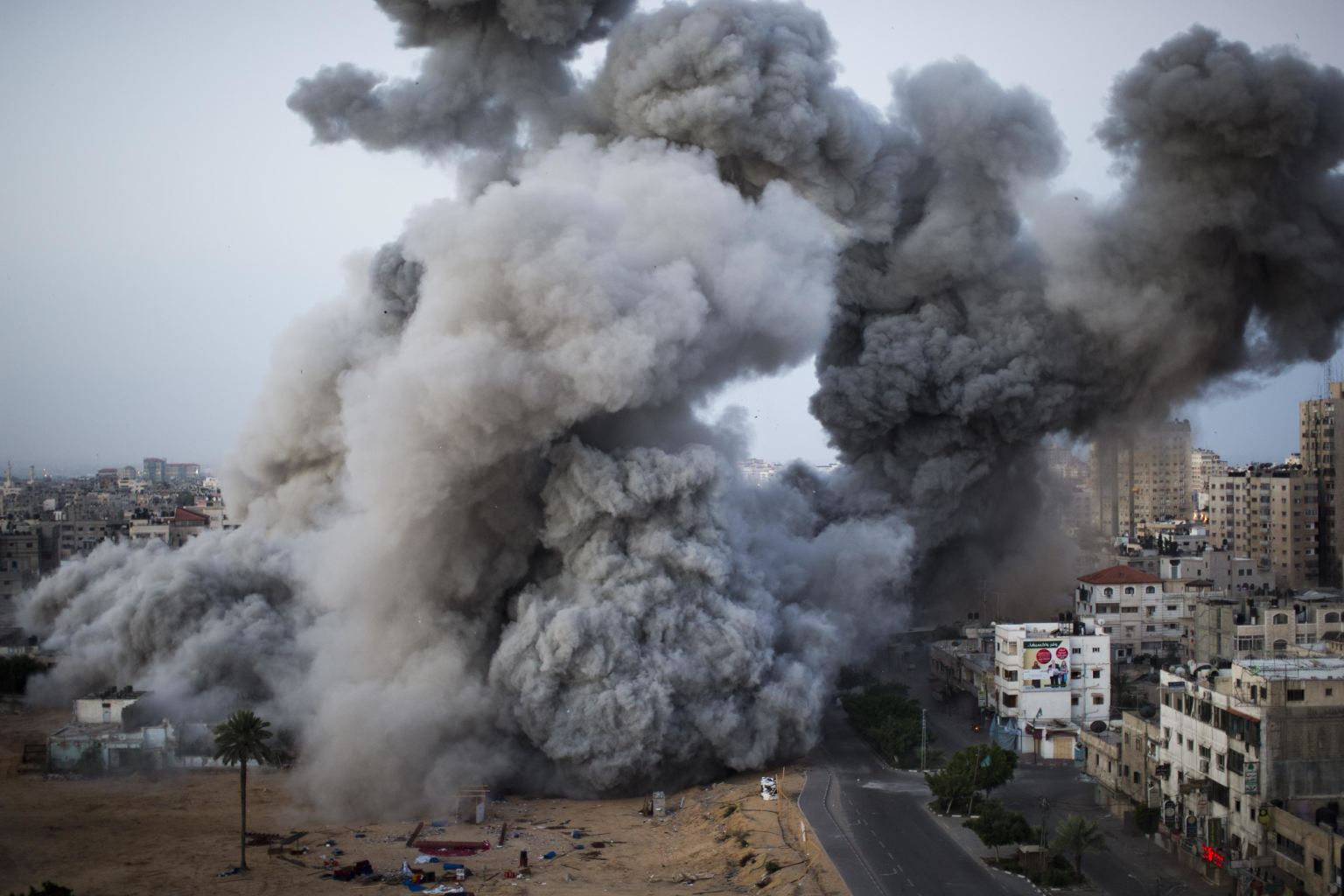
SOLDIERS OF IDF VS ARAB TERRORISTS

SOLDIERS OF IDF VS ARAB TERRORISTS
Showing posts with label Operation Pillar of Defense. Show all posts

Wednesday, November 28, 2012

Twenty Conclusions of “Operation Pillar of Defense”:


Last week, while visiting communities struck by Gaza missiles throughout southern Israel, it was easy to discern the all pervasive anger that Israeli citizens - from all walks of life - vented against the Israeli government for halting the attack on Gaza after only one week.
Civilians under the terror of aerial attacks find it hard to gain perspective on the achievements made during a one week November 2012 battle with the Hamas regime in Gaza.
Indeed, this was a battle. The war with Gaza is far from over.
This time, Israel's leaders used tactics of psychological warfare tactics against the tactics that its adversary uses.
Here are twenty conclusions of “Operation Pillar of Defense”:
1. Israeli Air Force’s pinpointed “surgical attacks” killed off Hamas leaders and deprived the Hamas regime offices of badly needed tactical and ideological leadership during the confrontation with the IDF- and Israel did so with a minimum cost to civilian casualties on the other side. Meanwhile, massive IDF attacks on the Hamas regime’s munitions tunnels signaled that the tunnel supply game is over.
2. When the IDF held back on a land incursion into Gaza, the other side was deprived of “shahidim”- maryters. Pupils in UNRWA schools in Gaza had been prepared by Hamas media professional “you tube” movies of themselves, which would be screened if they would become “shahidim” while attacking IDF troops during any IDF incursion into Gaza. Without available dead children in the form of Shahidim martyrs, it was hard for Israel's adversaries to make the case to the for “Israeli war crimes”
3 The IDF attack on Hamas TV antennas and the IDF bombing of the Hamas media center signaled that communications could now be a target of the IDF. The next step might be a cut off of all Gaza radio and TV frequencies, since these frequencies happen to be owned by Israel. These frequencies were leased by Israel given to the newly autonomous Palestinian Arab areas in Judea, Samaria and Gaza after the Oslo accords were signed in 1993, to communicate a message of peace....
4. A new unity of purpose swept Israel. Missile attacks on Tel Aviv and Jerusalem will help galvanize opposition in the center of the country to any possibility of a Palestinian Arab state in Judea and Samaria, which would place Tel Aviv and Jerusalem and, indeed, Israel’s only international airport, within ‘Sderot missile distance’ of any quasi independent Palestinian Authority entity The Hamas regime in Gaza proved that it could indeed hit the center of the country- Tel Aviv and Rishon Letzion and...Jerusalem. No longer would the people of Israel define the Hamas missile threat as limited or confined to Sderot and the Western Negev
5. Daily praise heaped upon Hamas during its battle with the IDF by the official media outlets of the Palestinian Authority unveiled the the formal alliance forged by the Fatah regime in Ramallah with the Hamas regime in Gaza. Since the EU, the US, Canada, Australia, Russia and even the UN define Hamas as a terrorist entity, the PA embrace of Hamas will place all future assistance to the PA in jeopardy. So much for the undeserved “moderate” image of the PA
6. Vocal Israeli Arab citizen support for the Gaza regime as it launched missiles on the center of Israel will also not be forgotten.
7 The Israeli surgical attacks took the wind out of the sails of anti Israel protest movements which had planned demonstrations to protest alleged Israeli “war crimes”.
8. The Israeli military campaign, unlike any other campaign since 1967, witnessed International support for Israeli military initiative, since the IDF focused on targeted killings of Arab military leaders. On the diplomatic front, US President Obama and virtually all European leaders expressed support of Israel
9. The battle did not conclude with a cease fire, but, rather, with a “tahadia” - a respite before the resumption of hostilities - which holds no obligations for the Arabs, yet also holds no obligations for Israel. Israel can therefore demonstrate total freedom to respond when it feels like, with the precedent of explicit int’l support.
10. After the PLO had worked for a generation to redefine the situation an “Israel-Palestinian conflict”, Israel faced an Iranian supported entity, which expanded the scope of the Gaza fighting into the international Islamic arena
11. A key element in this battle involved a test Tehran's deterrent system--the threat of missiles launched from Gaza was tested. Iranians could now gauge the effect on Israel of, and the ability of Israel to respond to, intensive bombardment from Gaza in retaliation for any Israeli, US or multinational attack on Iran. Iron Dome was proven to be effective, which can't be pleasing to Iran.
12. Egyptian President Mohamed Morsi, rather than visiting Gaza to demonstrate Egyptian solidarity with his fellow Muslim Brotherhood members (Hamas being the Palestinian branch of the MB), instead dispatched his prime minister Hesham Kandil, a minor figure, while Morsi frantically engaged in brokering an arrangement to stop the fighting. Morsi was shown to be far more concerned about keeping US financial aid flowing to Egypt than he is about anything else - Gaza, Israel, or Iran.
13. The IDF executed a successful reserve call-up that was simultaneously huge in absolute terms (75,000 troops, compared to about 10,000 reservists mobilized before Operation Cast Lead in 12/08) yet relatively small (the total IDF head count being about 621,500), indicating that, though much of its population was under the psychological stress of bombardment, Israel was capable of fielding almost 8 times as much reserve manpower to threaten Gaza with invasion as was assembled on the Gaza border in 2008 (not counting any elements of the 177,000-strong regular army, which trains constantly and is thus better prepared for combat than the reserves) yet still managed to have 5 times as many yet to be mobilized reserves as the 75,000 that have been called up.
14. The IDF killing of Hamas military chief, Ahmed Jabaari who masterminded Gilad Shalit's abduction, Yahiya al-Abya, the head of Qassam's rocket forces and Khamer Hamri, who commanded PIJ's missile operation were each an accomplishment in and of itself.
15 There were heart-rending casualties on the Israeli side- including the horrific murder -by-missile- of Mira Sharf, the 26-year-old pregnant wife of the rabbi of the Chabad House in New Delhi, was visiting Israel to attend a commemoration of the 2008 butchering of the couple who ran the Chabad House in Mumbai, while maiming of her husband and one of her children, only 4 years old.
16. In conclusion, the strategic position of Israel in the region has been bolstered by the impotence of the Gazan rocket barrage, the IDF's formidable response and the sudden unity of Israel under fire.
17. It now remains for Israel to cope with the fact that 65% of the population of Gaza continue continue to wallow in Hamas-run UNRWA facilities under the promise of the “right of return” to “their” homes and villages which they left after the 1948 war.
18.While villages of Gaza may develop into a prosperous entity, the one million descendants of the refugees from 1948 who live in UNRWA camps are indoctrinated to engage in an “armed struggle” to renew hostilities at any moment.
19. The Israel Ministry of Strategic Affairs. which operates out of the office of the Prime Minister's Office. is now drawing up a comprehensive document on UNRWA, which includes recommendations regarding the the financing of UNRWA, and the UNRWA administered education system. The document will pay special attention to “the cultivation of the Palestinian ethos of struggle and resistance” in the UNRWA schools.
20. Hamas was elected to control the administrative union and the teachers union of UNRWA in Gaza. That means that humanitarian aid and education to UNRWA in Gaza fall under direct control of a terror organization. With the UNRWA demands for cash transfers, international accountabilty for cash in the hands of Hamas has become a critical issue. It will now behoove donor nations to UNRWA in Gaza to ensure that humanitarian aid is not bartered by the Hamas leadership for munitions or for incitement in the UNRWA schools.

Sunday, November 25, 2012

For Israel, Gaza Conflict Is Test for an Iran Confrontation - NYTimes.com


WASHINGTON — The conflict that ended, for now, in a cease-fire between Hamas and Israel seemed like the latest episode in a periodic showdown. But there was a second, strategic agenda unfolding, according to American and Israeli officials: The exchange was something of a practice run for any future armed confrontation with Iran, featuring improved rockets that can reach Jerusalem and new antimissile systems to counter them.
It is Iran, of course, that most preoccupies Prime Minister Benjamin Netanyahu and President Obama. While disagreeing on tactics, both have made it clear that time is short, probably measured in months, to resolve the standoff over Iran’s nuclear program.
And one key to their war-gaming has been cutting off Iran’s ability to slip next-generation missiles into the Gaza Strip or Lebanon, where they could be launched by Iran’s surrogates, Hamas, Hezbollah and Islamic Jihad, during any crisis over sanctions or an Israeli strike on Iran’s nuclear facilities.
Michael B. Oren, the Israeli ambassador to the United States and a military historian, likened the insertion of Iranian missiles into Gaza to the Cuban missile crisis.
“In the Cuban missile crisis, the U.S. was not confronting Cuba, but rather the Soviet Union,” Mr. Oren said Wednesday, as the cease-fire was declared. “In Operation Pillar of Defense,” the name the Israel Defense Force gave the Gaza operation, “Israel was not confronting Gaza, but Iran.”
It is an imprecise analogy. What the Soviet Union was slipping into Cuba 50 years ago was a nuclear arsenal. In Gaza, the rockets and parts that came from Iran were conventional, and, as the Israelis learned, still have significant accuracy problems. But from one point of view, Israel was using the Gaza battle to learn the capabilities of Hamas and Islamic Jihad — the group that has the closest ties to Iran — as well as to disrupt those links.
Indeed, the first strike in the eight-day conflict between Hamas and Israel arguably took place nearly a month before the fighting began — in Khartoum, the capital of Sudan, as another mysterious explosion in the shadow war with Iran.
A factory said to be producing light arms blew up in spectacular fashion on Oct. 22, and within two days the Sudanese charged that it had been hit by four Israeli warplanes that easily penetrated the country’s airspace. Israelis will not talk about it. But Israeli and American officials maintain that Sudan has long been a prime transit point for smuggling Iranian Fajr rockets, the kind that Hamas launched against Tel Aviv and Jerusalem over recent days.
The missile defense campaign that ensued over Israeli territory is being described as the most intense yet in real combat anywhere — and as having the potential to change warfare in the same way that novel applications of air power in the Spanish Civil War shaped combat in the skies ever since.
Of course, a conflict with Iran, if a last-ditch effort to restart negotiations fails, would look different than what has just occurred. Just weeks before the outbreak in Gaza, the United States and European and Persian Gulf Arab allies were practicing at sea, working on clearing mines that might be dropped in shipping lanes in the Strait of Hormuz.
But in the Israeli and American contingency planning, Israel would face three tiers of threat in a conflict with Iran: the short-range missiles that have been lobbed in this campaign, medium-range rockets fielded by Hezbollah in Lebanon and long-range missiles from Iran.
The last of those three could include the Shahab-3, the missile Israeli and American intelligence believe could someday be fitted with a nuclear weapon if Iran ever succeeded in developing one and — the harder task — shrinking it to fit a warhead.
A United States Army air defense officer said that the American and Israeli militaries were “absolutely learning a lot” from this campaign that may contribute to a more effective “integration of all those tiered systems into a layered approach.”
The goal, and the challenge, is to link short-, medium- and long-range missile defense radar systems and interceptors against the different types of threats that may emerge in the next conflict.
Even so, a historic battle of missile versus missile defense has played out in the skies over Israel, with Israeli officials saying their Iron Dome system shot down 350 incoming rockets — 88 percent of all targets assigned to the missile defense interceptors. Israeli officials declined to specify the number of interceptors on hand to reload their missile-defense batteries.
Before the conflict began, Hamas was estimated to have amassed an arsenal of 10,000 to 12,000 rockets. Israeli officials say their pre-emptive strikes on Hamas rocket depots severely reduced the arsenal of missiles, both those provided by Iran and some built in Gaza on a Syrian design.
But Israeli military officials emphasize that most of the approximately 1,500 rockets fired by Hamas in this conflict were on trajectories toward unpopulated areas. The radar tracking systems of Iron Dome are intended to quickly discriminate between those that are hurtling toward a populated area and strays not worth expending a costly interceptor to knock down.
“This discrimination is a very important part of all missile defense systems,” said the United States Army expert, who spoke on the condition of anonymity to describe current military assessments. “You want to ensure that you’re going to engage a target missile that is heading toward a defended footprint, like a populated area. This clearly has been a validation of the Iron Dome system’s capability.”
The officer and other experts said that Iran also was certain to be studying the apparent inability of the rockets it supplied to Hamas to effectively strike targets in Israel, and could be expected to re-examine the design of that weapon for improvements.
Israel currently fields five Iron Dome missile defense batteries, each costing about $50 million, and wants to more than double the number of batteries. In the past two fiscal years, the United States has given about $275 million in financial assistance to the Iron Dome program. Replacement interceptors cost tens of thousands of dollars each.
Just three weeks ago, Gen. Martin E. Dempsey, chairman of the Joint Chiefs of Staff, visited an Iron Dome site as a guest of his Israeli counterpart during the largest American-Israeli joint military exercise ever. For the three-week exercise, called Austere Challenge, American military personnel operated Patriot land-based missile defense batteries on temporary deployment to Israel as well as Aegis missile defense ships, which carry tracking radars and interceptors.
Despite its performance during the current crisis, though, Iron Dome has its limits.
It is specifically designed to counter only short-range rockets, those capable of reaching targets at a distance of no more than 50 miles. Israel is developing a medium-range missile defense system, called David’s Sling, which was tested in computer simulations during the recent American-Israeli exercise, and has fielded a long-range system called Arrow. “Nobody has really had to manage this kind of a battle before,” said Jeffrey White, a defense fellow for the Washington Institute for Near East Policy. “There are lots of rockets coming in all over half the country, and there are all different kinds of rockets being fired.”

Friday, November 23, 2012

Lopsided casualty counts don't dictate morality


Jeffrey Goldberg does a good job with a New York Times editorial that isobsessed with the notion that the side that inflicts more casualties cannot be right. 
[T]hen the editorial states the following, in an effort to suggest that the Hamas threat is not quite existential:
Israel has a vastly more capable military than Hamas, and its air campaign has resulted in a lopsided casualty count: three Israelis have been killed.
Whenever I read a statement like this, I wonder if the person writing it believes that there is a large moral difference between attempted murder and successfully completed murder. The casualty count is lopsided, but why? A couple of reasons: Hamas rockets are inaccurate; Israel's Iron Dome anti-missile system is working well. But the Israeli body count isn't low because Hamas is trying to minimize Israeli casualties. Quite the opposite: Hamas's intention is to kill as many Israelis as possible. Without vigilance, and luck, and without active attempts by the Israeli Air Force to destroy rocket launchers before they can be used, the Israeli body count would be much higher. The U.S. judges the threat from al Qaeda based on the group's intentions and plans, not merely on the number of Americans it has killed over the past 10 years. This is the correct approach to dealing with such a threat.
Indeed. 

Tuesday, November 20, 2012

The ‘Kids’ Behind IDF’s Media; Young Israeli soldiers have pushed older commanders into adopting a more aggressive social media strategy


After the first night of Israeli airstrikes in Gaza, now almost a week ago, a photograph began circulating around Twitter of a grinning 11-month-old who had been killed by an Israeli missile that landed on his house. Within hours, Avital Leibovich, an Israeli Defense Forces spokeswoman, posted a reply of sorts: a photograph of another infant, this one an Israeli girl, wounded by a Hamas rocket in the southern town of Kiryat Malachi. It wasn’t the first skirmish of the virtual war being waged across social media networks by both the Israeli government and Hamas—the real-world hostilities were announced Nov. 14 by the IDF in a tweet trumpeting the death of Hamas leader Ahmed Jabari—but it was an early indication of how the awful life-and-death stakes of war have been reduced to Internet fodder.
The world is by now well aware of the power of social media to help foment and spread popular movements everywhere from Lower Manhattan to the streets of Cairo. But Operation Pillar of Defensemay be the first war to feature direct trash-talking between enemies. “We recommend that no Hamas operatives, whether low level or senior leaders, show their faces above ground in the days ahead,” came a tweet from the official @IDFspokesperson account last Wednesday. “@IDFspokesperson Our blessed hands will reach your leaders wherever they are (You Opened Hell Gates on Yourselves),” came the reply from @AlQassamBrigade.
It’s not clear who’s running the Qassam Brigade’s twitter feed, but in Israel, the IDF’s social media operation is run by a 26-year-old immigrant from Belgium named Sacha Dratwa. In the past two years,Dratwa has taken a small operation initially created during Operation Cast Lead to streamline the IDF’s YouTube and Facebook presence and turned it into the most globally visible arm of the Israeli military. In the past year, the new media desk has rapidly expanded into new terrain, from commissioning content designed for viral sharing to creating a Foursquare-style game for the IDF blog that rewards frequent visitors to the site with badges. The IDF is also posting video of its drone strikes, starting with the Jabari assassination, as well as of Israelis taking cover during air raids and of Iron Dome units successfully thwarting rockets launched from Gaza.
“The government still has to generate the talking points, what we want to achieve, and then we turn it over to the kids, and they translate it into this new language of social media,” said Daniel Seaman, deputy director general of the Ministry of Public Information and Diaspora Affairs, who ran the government press office during Operation Cast Lead. “I say it’s magic.”
“We want to explain to people what happens in Israel, simply,” Dratwa said in a brief telephone interview late last week. “We believe people understand the language of Facebook, the language of Twitter.”
For Israel, taking the war to Twitter, Facebook, Instagram, and even Pinterest is a natural outgrowth of the Israeli government’s public diplomacy initiatives, from helping organize seminars to train Israelis to advocate on the country’s behalf over social media networks to underwriting a campaign to improve the image of settlers among bloggers.
The goal, as Dratwa explained it, is twofold: to get Israel’s narrative out in real time, as people read about red alerts in Tel Aviv and rocket landings in Gaza on Twitter, and to cut out the middleman of “old media” in communicating with pro-Israel activists. “What we try to do is to be fast and get information out before the old media,” Dratwa told me. “We believe people are getting information from social media platforms and we don’t want them to get it from other sources—we are the ones on the scene, and the old media are not on the scene as are the IDF.”
It’s not immediately clear what concrete impact the IDF’s Twitter battles are having on the course of public opinion. Foreign journalists have been allowed to enter Gaza during Operation Pillar of Defense—a change from Israeli policy during Operation Cast Lead, when foreign journalists were barred from Gaza—resulting in a steady stream of gripping footage and images from the territory. But the IDF boasts 185,150 Twitter followers viewing its stream of videos, photos, and updates, which includes information from the front and frequent reminders of Israel’s ongoing provision of food and medical services to Gazan civilians. “There’s an idea of playing to your base,” said Garth Jowett, a professor specializing in propaganda and media at the University of Houston. “But it’s very hard to change people’s minds with propaganda.”
The IDF’s new media presence was originally the brainchild of Aliza Landes (the American-born daughter of the historian Richard Landes), who was herself only 25 when, as an officer on the IDF’s North American press desk, she piloted the IDF’s first forays into virtual warfare during Operation Cast Lead in the winter of 2008-2009. “In Israel, Facebook had only just opened up, and it was considered a toy for kids,” Landes said. “YouTube was the same. They didn’t think of it as a dissemination tool that could be effective—it was just a way for people to waste time in the office.”
Landes had already written position papers trying to excite her commanders in the spokesman’s office about the possibilities of a more aggressive social media strategy, but it wasn’t until videos she posted on YouTube began to tally up impressive views that they paid attention. Originally, she told me late last week, she had used YouTube as a way to transfer video files to foreign journalists, who were prevented by the Israeli military from entering Gaza during Cast Lead and were in many instances forced to rely on IDF footage. “It wasn’t for public consumption,” Landes said. She soon began posting routine information updates, like statistics on the number of rockets fired, to an IDF blog and, by the time Cast Lead concluded in January, had moved to commissioning original videos from the military film department. “It was sort of my pet project on top of everything else I was supposed to be doing,” Landes said.
In August 2009, Landes succeeded in convincing her superiors to give her a dedicated budget for a new media operation. The first big test came in January 2010, not for a war but after the massive earthquake in Haiti, when Israel dispatched emergency medical staff to the Caribbean island. “People were sending us requests for assistance based on Twitter,” Landes said. “So, it wasn’t just a PR tool, it became a practical rescue tool too.” That summer, Landes was responsible for sending out footagefrom the controversial Mavi Marmara commando raid and convinced her superiors to give her near real-time access to video.
By the time Landes left later that year, she had a staff of 10 people devoted to putting out polished material in concert with other government ministries–some of which, particularly videos from the widely scrutinized Mavi Marmara episode, wound up giving ammunition to Israel’s critics. “It’s important to be in the conversation,” Landes said. “If you just say, ‘I’m going to cut this out entirely,’ you’re not doing yourself any favors, and in fact you’re doing yourself a disservice.”
And while the IDF’s social media campaign has drawn criticism from those who feel it trivializes war and its consequences, it’s unlikely to be the last of its kind. “We’re at a moment where this stuff is not only the way a lot of these communications happen, but the audience is primed for it,” said Sree Sreenivasan, a professor of social media at Columbia’s School of Journalism. “There’s no point saying they shouldn’t be doing it because no one is going to listen,” he said. “Both sides are going to do whatever is in their self-interest,” he added. “And social media is an example of that.”

Monday, November 19, 2012

Why Is the Number of Israeli Casualties So Low? by idfspokesperson


In response to incessant rocket attacks from the Gaza Strip, the IDF has launched a widespread campaign against terror targets in Gaza. The operation, called Pillar of Defense, has two main goals: to protect Israeli civilians and to cripple the terrorist infrastructure in Gaza.
One of the most popular yet misleading arguments made is that Israel is not actually under attack, as proven by the low number of Israeli casualties.
"If Gaza was truly a threat," goes the reasoning, "there would be more Israeli casualties. Just like there are in Gaza."
The truth of the matter is that since the start of the operation, more than 650 rockets fired from Gaza hit Israel, with clear intentions of hurting the Israeli population. Each of these rockets has the capability of killing civilians, just like in Kiryat Malachi on November 15, where a rocket strike killed three civilians. These rockets also cause severe damage.
Since November 14 and the start of Operation Pillar of Defense, Hamas and other terrorists organisations in the Gaza Strip have targeted Israel's largest population. Using the Iranian long-range rocket, Fajr-5, terrorists fired rockets at Tel-Aviv and Jerusalem. These attacks mean that 3.5 million Israelis are under the threat of rocket attacks from the Gaza Strip.
So, if such a large number of rockets hit a limited area which houses over 3.5 million residents, how come the number of Israeli civilian casualties is so low?

Preventative strikes on terrorists and weapon manufacturing sites in Gaza:

A well-known tactic of the Israeli Air Force is to thwart terror attacks by striking preemptively at a site where terrorists are in the act of launching rockets. This is important, because if there is no absolute certainty that these are terrorists actively harming Israel, the strike is aborted even at the last minute. Just like in this video:
Since the start from the operation, the IDF has targeted more than 1,300 terror sites in the Gaza Strip, thwarting tens of rocket-launching attempts and targeting countless rocket launching sites. These strikes caused severe damage to terror groups' arsenal and drastically reduced the threat posed to Israeli civilians, by simple elimination.

The Iron Dome System: groundbreaking active defense.

A crucial defense since its deployment, the Iron Dome system is proving invaluable when countering the rocket threat. Its goal: to shoot down rockets about to hit major population centers. Some rockets land in open areas and pose little threat, but many others hit cities and towns. It's these rockets the Iron Dome system intercepts these rockets, calculating their trajectory and neutralizing them before they cause damage.
Since the beginning of the operation, the Iron Dome System has intercepted over 340 rockets aimed  directly at Israeli civilians, including rockets towards the Tel-Aviv area. That's more than an 80% success rate. That's active defense.

The readiness of the Israeli Home Front:

This isn't Israel's first time dealing with aggression from Gaza. In fact, over the last 12 years, more than 12,000 rockets have been fired from Gaza, terrorizing the lives of over a million Israelis in the south.People are already used to having less than 15 seconds to run to the nearest bomb shelter every time a rocket falls.
Many technologies have already been developed to help Israelis deal with the threat, such as installing a bomb-proof room in every house, or the implementation of the Red Color alarm system.
To help civilians be as safe as possible, in the past few days dozens of Home Front Command instructors visit shopping centers, schools and nursing homes throughout the country, explaining what to do in case of a rocket attack.
All together, the low number of injured Israelis in the recent escalation wasn't due to any humane gestures made by the terror organizations, or because they're not really a threat--it was because the IDF makes a point of differentiating between civilians and soldiers, and keeping the civilians safe.

SERAPHIC SECRET: Operation Pillar of Defense, Day Five: Hey, I’ve Seen This Movie Before


Israeli soldiers in a tank unit with a Torah scroll and religious prayer books at a tank staging area on the Gaza Strip border, in southern Israel, 16 November 2012.  EPA/JIM HOLLANDER
Eight years ago, in conversation with a wild-eyed Israeli-American member of Peace Now who was forcefully advocating for the expulsion of some 8,000 Jews from Gaza, I argued that:
1. Jews have the right to live anywhere, Brooklyn, London, Paris, Cairo, Damascus, Oslo, and yes, Gaza. Once you agree that, for the sake of, ahem, peace, Area X must be cleansed of Jews, you are conceding that Jews have no rights anywhere. This is nothing less than national suicide.
2. Thus, the Jews of Gaza were defending the the Jews of Jerusalem and the Jews of Tel Aviv, together with the rights of Jews who live anywhere and everywhere in the world.
3. Finally, the conflict with the so-called Palestinians was not about land, not about national boundaries, not about so-called refugees, and most certainly not about so-called occupation. This is an existential conflict where one side, the Arab Muslims, has vowed to annihilate the Jewish state, and then finish the job that Hitler started. In short, the Jews seek peace, while the Muslim Arabs seek genocide.
The Israeli-American leftie scoffed at my thesis, stating:
1. The cost of defending the Jews of Gaza was too high, in blood and treasury.
2. Israel’s standing in the world community was besmirched by the “occupation” of Gaza.
3. Regarding genocide: My leftie friend smirked, called me an alarmist, and explained: “They just use that language to whip up their base. When push comes to shove and Israel gets serious about peace, they will be quite reasonable.”
I countered that if the Jews of Gaza were expelled, the Jihadists would claim another victory over the Zionist invaders and Gaza would become a front-line terrorist state.
The leftie assured me that once the Jews of Gaza were gone, things might not be great, but they would be — and this is a direct quote — “much better.”
Well, a year later, the Israeli government, in a secret deal with the U.S., expelled the 8,000 Jews of Gaza. The Arab Muslims immediately turned Gaza into a notorious terrorist state, ruled with an iron fist by Hamas, an Islamist gang whose charter calls for the annihilation of the Zionist entity and the liquidation of all Jews everywhere. Rockets and mortars flew into Israel from Jew-free Gaza.
The expulsion was a resounding victory for jihadists.
Since then, Israel has gone into Gaza every few years, cleaned out a few bunkers and killed a few jihadist leaders — and has been viciously condemned on the world stage for the crime of self-defense and disproportionate use of power.
Of course, disproportionate use of power is the definition of fighting and winning a war.
But at some point, Israel decided that winning was not an option. So Israel’s disproportionate use of power was not so much.
Winning is too — well, mean.
Israel, left and right, settled on a doctrine of containment. Hold the line untilsomething happens. And then unicorns and rainbows will flourish in the Middle East.
Of course, the exact opposite happened.
The Arab Muslims attack with homicide bombers, rockets, mortars and missiles. Israel exercises restraint and then gets fed up, decides to act. Air campaign. Boom! Boom! Boom! Ground incursion. The Arabs dig up dead babies and display their broken corpses for the jackal journalists. The UN condemns Israel. Ceasefire.
Israel buries her dead, mourns and moves on, hoping that this time the Arabs have learned their lesson.
The Arabs have, indeed, learned their lesson as they ululate their victory over the Jewish usurpers. They have learned to build better bunkers, more accurate rockets, and set up more effective chains of command to their field operatives — for the next round.
Most important, the Arabs have learned that the Jews don’t really mean to win the war. They understand all too clearly that the Jews’ only strategy is to survive and to be loved by the Jew-hating world community.
Like kabuki, the conflict plays out in the same ritualized manner every few years. And Operation Pillar of Defense will, I’m afraid, be no different.
And in a few years, the missiles of Islam will be even more numerous, far more accurate, and impervious to Iron Dome.
The Jews of Gaza were expelled by the Jews of Tel Aviv.
In the not-so-distant future, the Jews of Tel Aviv will pay the price. So will the Jews of Berlin, Paris, London, Oslo, Los Angeles, and Hong Kong.
Finally: The very great Jeane Kirkpatrick, a life-long Democrat, was invited by Ronald Reagan to join his administration. Kirkpatrick, by that time deeply disillusioned by her party’s lurch to the left, asked Reagan to explain his Cold War strategy towards the Soviet Union.
Said Reagan: “We win. They lose.”
Unless Israel faces reality and decides to win, the Jewish state will lose.
My friend Jameel of the Muqata is live-blogging the war.

Saturday, November 17, 2012

Pogroms Interrupted: The Era of Jews Fighting Back By David Suissa


As I've been watching images of Hamas rockets falling on Israel, I've asked myself: If Hamas had the ability to murder thousands of Jews, wouldn't they? And if Israel didn't have a strong army, wouldn't we surely witness another pogrom? 

Since the destruction of the Second Temple some 2,000 years ago, has there been a more physically abused people than the Jews?

How many Crusades and Inquisitions and pogroms have been recorded where Jews were virtually helpless to defend themselves?

Oh sure, we always managed to survive and pull through. We were strong with our values, our Torah, our culture and our wits in adapting to whatever limits were imposed on us.

But physically? We were always at the mercy of our landlords.

My ancestors in Morocco survived only because they knew their place. You never heard of a Moroccan Jew fighting for the same rights as Moroccan Arabs. Jews were the dhimmis, the second class citizens of the state. And still, there were stories of pogroms against Moroccan Jews.

The physical abuse of Jews reached its darkest and most murderous hour with the Holocaust.

In Alcoholics Anonymous, they say you have to reach your own bottom before you can turn things around. Well, the Holocaust was our absolute bottom.

Perhaps not coincidentally, within a few years we were blessed with our own sovereign state. What would happen now? Would our enemies still come after us?

Indeed they did, but this time, something weird happened.

The Jews fought back.

A ragtag band of Jews fought mano a mano against five invading Arab armies and won.

That miraculous victory saved Israel and signaled a new era in the story of the Jews.

The era of Jews Fighting Back.

We've been in that era now for 64 years, and the truth is, we've become pretty good at it.

This has shocked our enemies. After 2,000 years of seeing Jews cower so as not to get slaughtered, they've seen these weak Jews transformed into fighting warriors.

This doesn't seem very "Jewish."

Even among Jews, this success has created a lot of handwringing and intellectual agony: What shall we do with all this power? Are we using it responsibly? Will it corrupt us?

I have to confess, I've had very little agony over this. The Jews' ability to finally fight back has been a source of great satisfaction for me.

Of course, I'd be a lot happier if we were at peace and didn't have to fight in the first place-- if we weren't surrounded by enemies trying to destroy us.

I wouldn't have to shed tears when I'm alone in my car, thinking of Israel at war, or talk to my daughter in Herzliya about bomb shelters.

But if Israel is destined to live, at least in the near term, surrounded by enemies, what are we to make of this dark circumstance?

Is it possible that all this fighting might be serving an additional purpose, beyond the essential one of defending the country?

As I've been reflecting on all this, the thought occurred to me that maybe Israel is more than a country.

Maybe it's also a statement.

An official statement that says to the world: The Jews will never go away.

This statement of strength after 2,000 years of weakness is so astonishing that it needed a singular, dramatic instrument to make the point.

And what better instrument than a strong country?

A country so powerful it has managed to thrive on so many levels despite being virtually under siege for 64 years.

So, that is my Jewish take on all this ugly fighting: Our enemies need to see, once and for all, that the Jews will never go away.

Maybe only then will there be peace.

The other night, at a Technion event at the home of Frank Lunz, our Consul General, David Siegel, said: "Our enemies have tried for thousands of years to destroy us, but they've always failed."

The difference now is that we're surviving on our own terms, not by cowering but by holding our heads high.

I'm sure some people will find this tone of defiance a little unseemly, not very nuanced.

But there's no nuance in hatred. There's no nuance in the desire to murder Jews. There never has been.

The statement that the Jews will never go away is a statement that must be made. We can thank Israel for making that statement in the most compelling way possible, even at the risk of upsetting a world not used to seeing Jews fight back.

At the Technion event, they played a video showing some of Israel's global accomplishments, such as finding renewable energy, curing diseases and helping crippled people walk.

We can thank Israel for that statement, too: A world in which the Jews survive is not just good for the Jews, it's also good for the world. 

How Does Hamas Acquire Its Weapons?

Fajr 5 - The Hamas Rocket That Threatens Millions of Israelis

The Pillars of Defense


Suicide Squads Deployed Near the Border in Anticipation of IDF Invasion


An Israeli woman walking through her home that was hit by a rocked fired from the Gaza Strip.


Pillar Of Defense: Fourth Day Recap


In response to incessant rocket attacks from the Gaza Strip, the IDF has launched a widespread campaign against terror targets in Gaza. The operation, called Pillar of Defense, has two main goals: to protect Israeli civilians and to cripple the terrorist infrastructure in Gaza.

Here's a recap of the fourth day of the operation.

For live updates from the IDF:http://www.idfblog.com/2012/11/14/live-updates-idf-terror-targets-gaza/

For more from the IDF:
http://www.idfblog.com/
http://twitter.com/idfspokesperson/
http://www.facebook.com/idfonline/
http://www.idf.il/english/