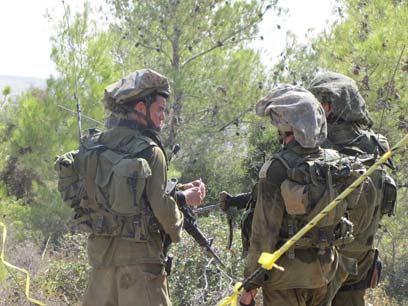
SOLDIERS OF IDF VS ARAB TERRORISTS

SOLDIERS OF IDF VS ARAB TERRORISTS
Showing posts with label US Military Aid. Show all posts

Sunday, July 29, 2012

Obama Upstages Romney, Strengthens Security Ties with Israel On the eve of Mitt Romney's visit to Israel, President Barack Obama signs bill to strengthen U.S.-Israeli military ties; Remarks by the President at Signing of the United States-Israel Enhanced Security Cooperation Act


THE PRESIDENT: Hello, everybody. Hope you guys are all staying cool. Well, listen, I just wanted to welcome these outstanding leaders to the Oval Office. I want to in particular acknowledge Congressman Howard Berman and Senator Barbara Boxer, who have done outstanding work in shepherding through this bipartisan piece of legislation that underscores our unshakeable commitment to Israel.
As many of you know, I have made it a top priority for my administration to deepen cooperation with Israel across the whole spectrum of security issues — intelligence, military, technology. And, in many ways, what this legislation does is bring together all the outstanding cooperation that we have seen, really, at an unprecedented level between our two countries that underscore our unshakeable commitment to Israel security.
I’m also very pleased that this week we are going to be able to announce $70 million in additional spending — $70 billion [million]*, excuse me, in additional spending for Iron Dome. This is a program that has been critical in terms of providing security and safety for the Israeli families. It is a program that has been tested and has prevented missile strikes inside of Israel. And it is testimony to the leadership of the folks sitting here that we’re going to be able to lock in that fund to assure that that program continues and that we are standing by our friends in Israel when it comes to these kinds of attacks.
Let me just close by saying that the tragic events that we saw in Bulgaria emphasize the degree to which this continues to be a challenge not just for Israel, but for the entire world — preventing terrorist attacks and making sure the people of Israel are not targeted.
And I hope that, as I sign as this bill, once again everybody understands how committed all of us are — Republicans and Democrats — as Americans to our friends in making sure that Israel is safe and secure.
Leon Panetta, our Secretary of Defense, will be traveling to Israel to further consult and find additional ways that we can ensure such cooperation at a time when, frankly, the region is experiencing heightened tensions.
So, with that, let me sign this bill. Again, I want to thank all who are standing beside me for their outstanding leadership and their outstanding work on this issue.
(The bill is signed.)
Let me make sure I’m using enough pens. (Laughter.) There you go. Thank you.

---
President Barack Obama signed a bill on Friday to strengthen U.S.-Israeli military ties, Reuters reported.
Obama used a White Houseceremony to announce the United States would soon provide Israel with an additional $70 million in funding for the Iron Dome short-range rocket shield.
As Obama signed the bill at his desk in the Oval Office, he said it underscored his administration's "unshakeable commitment" to Israel's security. Congress passed the legislation last week with broad support from Republicans and Obama's Democrats.
“I have made it a top priority for my administration to deepen cooperation with Israel across a whole spectrum of security issues,” Obama was quoted as having said in the Oval Office.
The new bill calls for enhanced cooperation with Israel on missile defense and intelligence, and increased access to advanced weapons.
It is believed that Obama’s focus on strengthening cooperation with Israel was timed to try to upstage his Republican rival, Mitt Romney, who has accused the president of undermining Washington's relationship with its number one partner in the Middle East. Romney will travel to Israel on Saturday, where he will meet with Prime Minister Binyamin Netanyahu and President Shimon Peres.
Obama, criticized by some of Israel's U.S. supporters for being too tough on a close ally, wants to shore up his support among Jewish voters, who could prove critical in battleground states like Florida and Pennsylvania in the November 6 election.
Obama received 78 percent of the Jewish vote in the 2008 election, but a nationwide Gallup poll in June showed him down to 64 percent backing versus Romney's 29 percent.
He angered many Israelis and their U.S. supporters last year when he insisted any negotiations on the borders of a future Palestinian state begin on the basis of lines that existed before 1967, when Israel liberated Judea and Samaria during the Six Day War.
Obama visited Israel as a candidate in the 2008 campaign but has not done so as president. Colin Kahl, an Obama aide, said this week Americans can “expect”Obama to visit Israel during his second term.
Romney, meanwhile, criticized Obama’s attitude towards Israel on Friday, telling theYisrael Hayom newspaper that Israel deserves better treatment than it has received from Obama.
Romney told the daily paper that he, unlike Obama, would not make disputes with Israel’s leaders a public affair. “I cannot imagine going to the United Nations, as Obama did, and criticizing Israel in front of the world,” he said. “You don’t criticize your allies in public to achieve the applause of your foes.”
If he were to disagree with Israel, differences would be discussed “in private conversations, not public forums,” he added.

Thursday, November 11, 2010

U.S. to store another $400m worth of emergency military equipment in Israel Equipment to stand at Israel's disposal in an emergency; hike will bring the value of American military equipment stockpiled in Israel to $1.2 billion by 2012.

The U.S. government is to move an additional $400 million worth of military equipment to emergency storage in Israel over the next two years.

The equipment, which includes so-called smart bombs, will stand at Israel's disposal in an emergency.

The U.S. Congress approved the hike last month, which will bring the value of American military equipment stockpiled in Israel to $1.2 billion by 2012. The story was first reported this week by Defense News magazine's reporter in Israel, Barbara Opall-Rome.

The U.S. stores equipment in Israel by virtue of a special clause in U.S. foreign aid law governing war reserves stockpiles for allies. According to the clause, the equipment can be utilized by American forces throughout the world, and also, in an emergency, by the military in the country where the equipment is stored.

The clause was originally intended to allow South Korea use of American equipment in case of a surprise attack by North Korea.

The type of equipment stockpiled in Israel is determined through dialogue between the Israel Defense Forces and the U.S. Army's European Command. The issue was raised in discussions last week during the visit by the IDF's logistics and technology chief, Maj. Gen. Dan Biton, at the Pentagon in Washington.

The agreement between the two armed forces also includes conditions under which the IDF may use the equipment. It is believed that a great deal of the equipment will include precision weapons launched from the air.

IDF Chief of Staff Gabi Ashkenazi said this week that in Israel's future wars, much more precise weaponry will be needed to strike urban targets from the air without injuring civilians.

During Operation Cast Lead, 81 percent of the missiles and bombs launched from the air on and by IDF artillery were of the precision type.

Use of the the American equipment is allowed with permission of the American administration; Israel used such U.S. weaponry during the Second Lebanon War.

The first time equipment was stockpiled in Israel was in 1990, when a ceiling of $100 million in value was set, which was raised to $300 million during the first Gulf War and later raised to $400 million. It was doubled in 2007 after the Second Lebanon War, and, as noted, will reach $1.2 billion by 2012.

It is assumed in Israel that the U.S. administration asked Congress to increase the value of U.S. emergency equipment to signal its continued commitment to Israel's security. It is also believed the increase is meant to as an indication to Israel that it will not need to mount a surprise attack on Iran's nuclear facilities and that it can take risks for peace.

Israel is also expected to be allowed more involvement in selecting the types of equipment and weapons to be stored here and greater freedom to use it in an emergency. The equipment is stored in special bases for emergency supplies that are under American supervision.

Ben-Gurion International Airport and a base in Nevatim are expected to stockpile U.S. equipment arriving by air during both war and peacetime.

The agreement on the additional stockpiling is part of the very significant upgrading in security relations between Israel and the United States, which also involved an increased number of joint exercises with the United States, during which joint command over complex operations were also drilled. The upgrading of relations in the security realm also involved the special allocation of $500 million to finance the purchase of an Iron Dome battery, and the signing two months ago of an agreement to supply the IAF with the first squadron of the future F-35 fighter aircraft.

Sunday, November 7, 2010

ISRAEL MATZAV: IAF gets equipment for 'killing machines'


The IAF has taken delivery on 1,000 small diameter bombs (SDB's) from the United States. The bombs, which weigh about 250 pounds each, and have about 50 pounds of explosives, are as powerful as a bomb containing 900 kilograms (nearly a ton) of explosives.
Israel is the first country outside of the United States to receive the weapon.

The IAF has named the new bomb “Sharp Hail.” The total cost of the deal was $77 million.

The GPS-guided SDB is said to be one of the most accurate bombs in the world. It has the same penetration capabilities as a normal 900-kg. bomb, although it has only 22.7 kg. of explosives. At just 1.75 meters long, its small size increases the number of bombs an aircraft can carry and the number of targets it can attack in a sortie.

Tests conducted in the US have proven that the bomb can penetrate at least 90 cm. of steel-reinforced concrete.

The GBU-39 can be used in adverse weather and has a standoff range of more than 110 km. due to its pop-out wings.

This enables aircraft to attack more targets per sortie, since each weapon’s station can carry four bombs.

The first planes to have the GBU-39 are the IAF’s F- 15Is – which can carry around 20 of the bombs on its wings and fuselage, turning the aircraft into what defense officials termed a “killing machine.”
Hmmm.

Friday, October 29, 2010

YNET: Rare glimpse at Egoz Unit exercise: 'Hezbollah's nightmare' In guerilla fights against Hezbollah, every bush becomes a threat. Officers: 'We aren't playing make believe, this is the only way to truly be prepared'

Even after 35 kilometers (about 22 miles) of movement on the foothills of the Carmel Mountains over a period of 48 hours without sleep, in 30 degree heat and with dozens of kilograms of equipment on their backs, the Egoz Unit combat soldiers remain focused on their mission. When a demolition charge "explodes" near one of the teams and "hits" almost half the team, the others didn't hesitate for a moment. They immediately lifted their friends on their shoulders and continued on their mission.

New IDF Infantry Fighting Vehicle Designed in Israel, Built in America

Israel is having a U.S. firm (General Dynamics) manufacture 600 of the new Nemer IFV (infantry fighting vehicle) over the next eight years. The first hundred or so were built in Israel, but the rest can be built more cheaply in the United States. One infantry battalion is already equipped with Israeli built Nemers, and the other three battalions of the Golani Brigade will get Nemers over the next three years.

Thursday, October 14, 2010

A7: US Military Aid to Lebanon Unlikely after Iranian's Visit

Sources in the US Congress said Thursday that the warm formal welcome Lebanon has extended to Iran's president Mahmoud Ahmadinejad has convinced key representatives in Congress to continue the freeze on military aid to Lebanon. Lebanese daily An-Nahar reported that Reps. Howard Berman and Nita Lowey – the respective chairs of the Foreign Relations Committee and Subcommittee on Foreign Appropriations – are now “vehemently” opposed to lifting the moratorium.

Friday, October 8, 2010

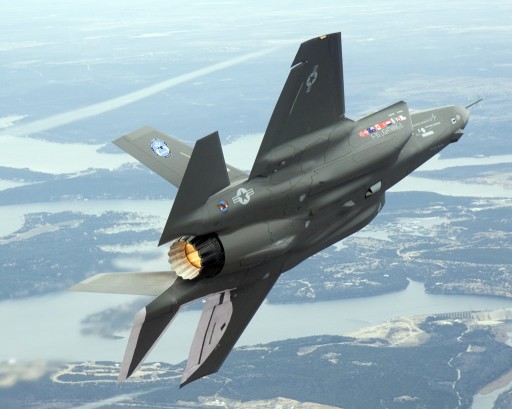
Israel will be first to buy F-35

Israel signed a contract to purchase 20 F-35 stealth fighters on Thursday, and will be the first country to take delivery of the jets in 2015.
On October 7, Israel’s Ministry of Defense Director General (Maj. Gen. Ret.) Udi Shani signed the Letter of Offer and Acceptance for the procurement of the F-35 aircraft. The acquisition of the planes will be funded by U.S. military aid, over eight years. The new fighter will be provided along with an integral support package, sustaining the aircraft through its service life. The decision has yet to pass the approval of the Israeli government. The purchase will be funded by U.S. military aid to Israel. Israel originally planned to initially buy of 25 aircraft. The current decision trims this initial buy by five aircraft. According to Israel MOD sources, the flyaway cost of these aircraft will be $96 million, but this cost reflects only the net price of the platform.

The expenses including the preparation of the new squadron, initial infrastructure, logistical and support package is expected to eventually exceed $150 million per plane. Given the additional integration cost of locally developed Israeli systems, planned for integration into this highly complex aircraft, the cost of future batches is expected to rise significantly for the fully equipped F-35Is in following years. Israel’s future plans are to buy 75 F-35Is. Furthermore, for these enhancement and adaptations Israel may have to rely on local currency funding, unlike the aircraft acquisition program that will be funded entirely by the annual U.S. aid amounting over $2 billion per year.

Israeli pilots will begin training on the new aircraft by 2014 and the first aircraft are expected to arrive in Israel by 2015. The first squadron could become operational in less than two years at one of the Israel Air Force (IAF) southern air bases.

The initial F-35I will represent standard 
F-35A models. However, the F-35I acquisition agreement is opening opportunities for the installation of Israeli systems in future production batches. These opportunities will also open the aircraft for marketing Israeli systems to other air forces, reflecting an opportunity worth several billions of dollars for the local industry. Gen. Udi Shani has stated that the acquisition agreement also includes a framework for buyback purchasing from the Israeli industry worth $4 billion. The introduction of Israeli components, systems and technologies into the world’s newest fighter plane will also open a potential market opportunity worth about $5 billion among the aircraft users.

Thursday, October 7, 2010

Israel Buys 20 US-Made Fighter Jets That Can Reach Iran Undetected

The U.S. and Israeli governments signed an agreement Thursday for Israel's purchase of a squadron of 20 American-made F-35 stealth fighter jets that have the capability of reaching Iran undetected by radar.