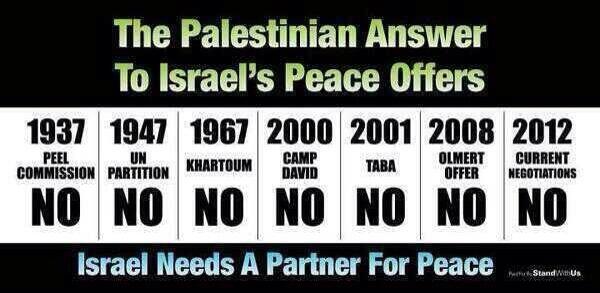
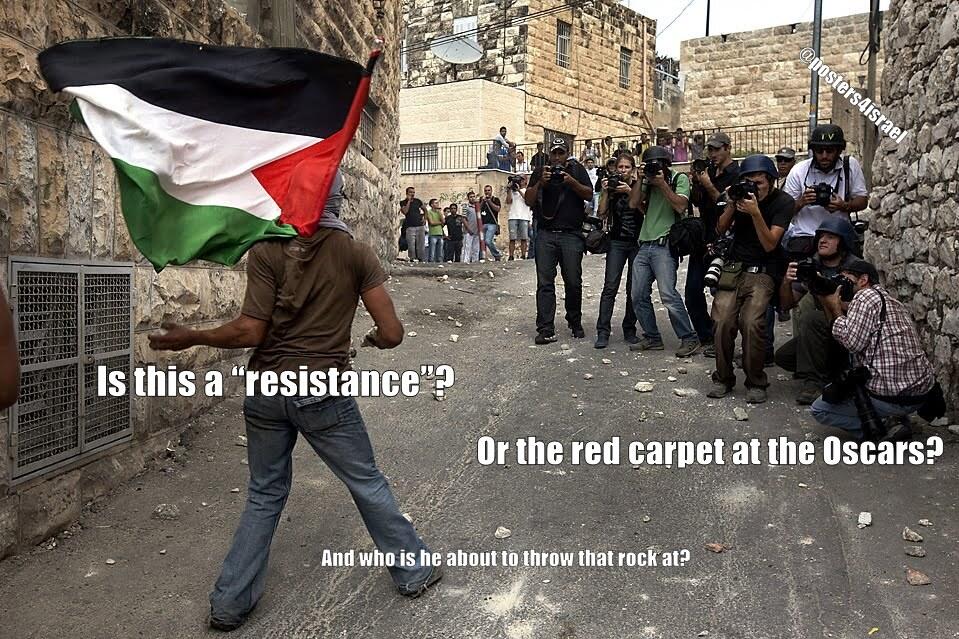
SOLDIERS OF IDF VS ARAB TERRORISTS

SOLDIERS OF IDF VS ARAB TERRORISTS

Sunday, January 12, 2014

Leonard Cohen - Yom Kippur War When war broke out on Yom Kippur in 1973, Leonard Cohen was touring on the Greek island of Hydra • He dropped everything, left his wife and son, and headed to Israel • "I will go and stop Egypt's bullet," he said.


Ariel Sharon with Leonard Cohen in middle of the Yom Kippur War. Sinai desert, October 1973
------------------------------------------
There is a war between the rich and poor,
a war between the man and the woman.
There is a war between the ones who say there is a war
and the ones who say there isn't.
Why don't you come on back to the war, that's right, get in it,
why don't you come on back to the war, it's just beginning.
-- from "There Is a War" by Leonard Cohen
When the Yom Kippur War began, Aharon (Yalo) Shavit, the commander of the Etzion Airbase in Sinai, telephoned his close friend, the singer Oshik Levi. "You have to come here and perform," Shavit told him. "This isn't anything like what we know. It's not like the Six-Day War at all. It's something completely different."
Levi did not hesitate. The next day he and his partner in the show, Mordechai Arnon, came to perform for the troops just before they entered the war.
At the same time, not far from the chaos in Israel, Leonard Cohen was in the midst of a performance tour on the island of Hydra in Greece. His wife Suzanne and his son Adam were with him. When Cohen heard on the news that the war had begun, he felt he had to drop everything and head for Israel from Athens to help in the national effort in any way he could. And so he did.
The original plan was to volunteer on a kibbutz even though he had no idea what a kibbutz was or what he would do there. The values that the IDF represented intrigued and attracted him, and he was determined to join the army and give of his talents. Cohen believed he would contribute significantly to the Israeli struggle. "I will go and stop Egypt's bullet," he said, with a measure of bravado, in one of his poems.
It was not the first time Cohen had tried to feel close to war. The war stories of his father, who had fought in World War I, influenced him deeply, and Cohen loved to look at his father's photo album, which was filled with photographs of him in his uniform, holding his gun.
On his return to the United States after performing for Israeli soldiers in the outposts of Sinai, Cohen would say in an interview, "War is wonderful. They'll never stamp it out. It's one of the few times people can act their best.... There are opportunities to feel things that you simply cannot feel in modern city life."
Driving to the Hatzor base in a Ford Falcon
The next morning, Levi started his day in Pinati, a well-known Tel Aviv cafe, gathering strength for his show with his friends. He says that when he raised his head, he could hardly believe that the object of his admiration, Leonard Cohen, was sitting near him and speaking to the actor Ori Levy. Once he got over his shock, Oshik Levi approached Cohen, introduced himself and began to chat with Cohen and Ori Levy. Cohen said he had flown to Israel out of "a sense of mission and a desire to take an active part in the war," as he described it.
While Cohen was considered a well-known singer in Israel at the time, he was not yet so famous that people identified him on the street. But Levi, a huge fan of Cohen's, certainly did. "Cohen heard that the situation in Israel was really not good, so he came to help the Jewish people in any way he could," he said.
Cohen wanted to volunteer on a kibbutz for as long as he was needed, as a kind of temporary kibbutznik. Levi says that to him, the thought of Cohen working as a volunteer seemed to him "a total waste." From his extensive experience performing for the troops in previous wars, Levi knew how important it was to raise the morale of soldiers about to go into battle, and the powerful significance of performing for wounded soldiers returning from the war, physically and emotionally scarred.
So Levi decided to persuade Cohen to join his group of artists, which included himself, Mordechai Arnon, Matti Caspi and, later on, Ilana Rovina. "I talked him out of the idea of volunteering on a kibbutz. I told him: 'Come with me and perform for the troops.' At first, Cohen didn't like the idea at all. He was afraid that his sad, depressing songs would have the opposite effect and only make the troops and the wounded soldiers feel worse. When Levi assured him that it would be all right, Cohen joined them that very day.
"I drove to the hotel with Pupik [Mordechai Arnon] and Matti [Caspi], and we headed toward the Hatzor base in a 1961 Ford Falcon I had," Levi recalls. He adds that Cohen had no idea where he was going, and he was afraid of the things he would see and even of the dangers on the way. He had never been so close to war, and Israel at that time was in a state of chaos -- there were many losses, and the reports upset him. Levi remembers: "All the way there, we tried to dispel each other's fears. None of us -- not we, and certainly not he -- knew what he might be getting into."
A musical escape from hell
The first performance was a kind of test run for the musicians. Matti Caspi went on stage to accompany Cohen on the guitar. This was a tough job for a person whom many considered a musical genius and who was used to writing complex melodies. Cohen's songs were based on three or four chords only.
The fact that there were no decent conditions to hold a show in -- certainly not the kind Cohen was used to -- did not bother him. He went up on stage with a classical guitar and no amplification but a single microphone that a soldier volunteered to hold for him.
While quite a few of the soldiers didn't know who Cohen was, others identified his songs and his voice, and were very touched that Cohen had come to Israel to be with them during those difficult times. For those who knew Cohen, his show was an extraordinary event. After all, it was not every day that they got to be present at a private, intimate performance just for them. It was a musical escape from hell. During one show, before Cohen sang "So Long, Marianne," he told the soldiers: This song should be listened to at home, with a drink in one hand and your other arm around a woman you love. I hope you'll have that soon.
In the meantime, two shows were set up for the group. During a break between them, Cohen sat in a corner, writing. When he stood up a bit later, he was holding a paper with a new song, "Lover, Lover, Lover," which quickly became one of his most popular songs. The song is a conversation between the speaker and his father, who says to him at the end of the song, "And may the spirit of this song,/May it rise up pure and free./May it be a shield for you,/A shield against the enemy." During one of his performance tours after the war, Cohen said, "This next song was written in the Sinai desert for the soldiers of both sides." Another interesting anecdote: One of the songs Cohen performs often in his shows is "Who By Fire," which is taken from the liturgical poem "Unetanneh Tokef," which is recited on both Rosh Hashana, the Jewish New Year, and on Yom Kippur.
The trip to the Hatzor base that Sunday was the opening shot of the group's improvised tour, which lasted three months and included many performances, sometimes as many as seven or eight in one day. The group ran from base to base and from hospital to hospital, and Cohen believed it was important to get involved and speak with the soldiers, from the highest-ranking commander to the newest recruit. He admired them simply because they fought.
The time he spent in Israel was hard for him. Besides the day-to-day fear of shelling from every direction, Cohen had a fear of performing for soldiers shortly before they went into the hell that was Suez. Levi and his friends remember some particularly tough moments, such as when they met the soldiers for whom they had performed a few days before in the hospital after they had been wounded. The sights were hard for everybody and particularly for Cohen, who was being exposed to war for the first time in his life.
Everyone who met Cohen and spoke with him during his stay in Israel describes him as modest and gentle man who wanted to connect to and feel the audience he sang for. "On some of the bases we went to, I tried to get him preferential treatment, a room to sleep in, decent food instead of army rations. But he wouldn't allow it," Levi says with a smile. "The three of us slept in sleeping bags in the canteen or anywhere else we could sleep. He never complained about anything, not even once."
At the time, Mordechai Arnon was very interested in astrology, a subject that was close to Cohen's heart. Another subject he loved was the principles of Greek philosophy, and he and Arnon would discuss philosophy far into the night.
Cohen found relief from the war and the terrible things he saw by writing in his notebook, which he took with him wherever he went. It was a kind of travel diary where he felt free to pour out his heart, writing about the times when the terrible things he saw overcame him and made him weep, about the beauty of the desert that captured his heart, the love between soldiers that moved him, and, of course, about the soldiers who had been killed and wounded.
Occasionally, they would arrive at an outpost or a trench in the dark, and they had no idea where they were or whom they would find there. One time, the group was asked to appear for several soldiers standing around a 175 mm artillery gun. In the midst of the ad-hoc show, the officers asked them to stop singing for a few moments so the soldiers could load the gun and return fire. Only afterward did they get permission to resume the show, at least until the next interruption.
"Committed to the survival of the Jewish people"
Even though those were dark days, the war still furnished fleeting moments of joy and excitement. Shmuel Zemach, the chairman of the Association of Impresarios and Stage Producers and an impresario himself, will never forget the show on the Golan Heights after the Golani Brigade recaptured Mount Hermon. One of the most important outposts in the north, Mount Hermon earned the nickname "the eyes of Israel," an expression coined by Benny Masas, a combat soldier of the Golani Brigade's 51st Battalion. The price of victory was steep: roughly 80 killed and dozens more wounded.
"Even the soldiers who came back from the battle shouted, 'We've captured the eyes of the country.' At that very moment, we were asked to bring the artists up on stage," Zemach recalls. "The excitement, energy and joy, mixed as they were with terrible sadness, created the most moving performance I ever saw in my life. It's a show I will never forget."
For Cohen, the end of his mission came the moment politics began to trickle into the war. Cohen had decided to come to Israel to give of himself for the good of everyone as long as diplomats weren't involved in the war. Once the tables turned and Israel had the upper hand, the Americans pressured Israel to agree to a cease-fire -- pressure that reached its peak during Henry Kissinger's visit to Moscow. The formula for a cease-fire was accepted in the Soviet Union, and the cease-fire agreement later became Resolution 338 of the U.N. Security Council.
Once the talks began, Cohen stopped the tour of ad hoc shows, left Israel and returned to his home in the U.S. About a year later, he was quoted as saying: "I've never disguised the fact that I'm Jewish, and in any crisis in Israel I would be there. I am committed to the survival of the Jewish people."

In honor of Ariel Sharon, I present pictures of my father Dr. Samuel I. Cohen, ztl, and Sharon.

On Feb. 21, 1983, Time magazine suggested that Israeli Defense Minister Ariel Sharon had encouraged Lebanese Christian forces to take "revenge" the previous September against Palestinian refugee camps for the assassination of Bashir Gemayel, Lebanon's newly elected president. Sharon sued Time for (blood) libel. The jury in that case found that Time had not acted out of "actual malice," a necessary intention under the law to prove libel. But in a non-binding further finding, jurors held that Time had acted "negligently and carelessly" in its reporting about Sharon's role in the Sabra and Chatilla killings. Those few words from the jury were a "vindication" of Sharon, and became the justification for the Lebanon war, for Sharon's role in that war and indeed of his entire military and political career.  It became the subject of an outstanding book by my good friend and colleague Rabbi Dov Fischer - formerly known as Dov Aharoni (below) General Sharon's War Against Time Magazine (the courtroom sketch is below) in Manhattan.

My father, Dr. Samuel I. Cohen, ztl, was the Executive Vice President of the Jewish National Fund (JNF) of North America at the time of the trial, and he was absolutely fascinated with the twists and turns of the case, fascinated with Ariel Sharon and of his trial lawyers. My father told me that he was in awe of General Sharon's leadership qualities, of his bulldog tenacity, and of his blood and guts demeanor. When I drove my father to work in the morning from Lawrence Long Island to Manhattan, he would read to me the New York Times updates of the Sharon vs. Time civil trial to me and we spoke extensively about it and he used this opportunity to encourage me to become an attorney.  This was a formative time for me - transitioning from graduating from Queens College and the Chofetz Chaim Yeshivah in Queens, about to go to law school. In my mind, I credit in part my legal career and my obsession with being a trial attorney to these priceless moments between father and son about our hero.  In honor of Ariel Sharon, I present pictures of my father and Sharon.

Displaying DADDY & PRIME MINISTER ARIEL SHARON 2.jpg

Displaying DADDY WITH ISRAELI PRIME MINISTER ARIEL SHARON.jpg

Inline image 1

General Sharon's War Against Time Magazine / Dov Aharoni
ArielSharon_01

Hur and Aharon holding up Moshe's hands as Joshua battled Amalek

Hur and Aharon holding up Moshe's hands as Joshua battled Amalek.

The Giant and the General By: Yori Yanover

Davar reporter Noach Zevuluny wrapping a tefillin strap on Ariel Sharon's arm at the Kotel shortly after the 1967 Six Day War. This event, and a personal tragedy that befell the Sharon family months later, were a precursor to a lengthy relationship between the Lubavitcher Rebbe and Sharon. I believe this relationship was a long educational project of the Rebbe that ended with mixed results.

Davar reporter Noach Zevuluny wrapping a tefillin strap on Ariel Sharon's arm at the Kotel shortly after the 1967 Six Day War. This event, and a personal tragedy that befell the Sharon family months later, were a precursor to a lengthy relationship between the Lubavitcher Rebbe and Sharon. I believe this relationship was a long educational project of the Rebbe that ended with mixed results. Photo Credit: shturem.net 

My good friends and former employers at Chabad.org have utilized Ariel Sharon ZL’s passing to educate the public about the latter’s relationship with the Lubavitcher Rebbe. I’m grateful to them for that, even though their obituary comes close to suggesting that Sharon was a hidden Chabadnik. He really wasn’t, and I don’t think the good people of the Lubavitch News Service believe it either. But they did remind me of two events in Sharon’s life that came in close proximity and had to have influenced his life. Right after the Six Day War, Sharon led a group of South African military officers—the bad kind—on a tour of liberated Jerusalem, and stopped at the Western Wall. Lubavitch had just set up their tefillin booth there, and the chassid operating it, Reb Aharon Rabinowitz ZL, a former Soviet prisoner, wanted very much to get Arik to roll up his sleeve for Judaism, but was too timid to ask. And so a religious Jerusalemite journalist named Noach Zevuluni, who was writing for the Histadrut trade union’s daily Davar, approached the general with the request. Arik—reluctantly, according to Zevuluni ZL—acquiesced. There are apocryphal versions of this story, a noted one in which David Ben Gurion is also in the group and refuses to put on tefillin. Another version gathers the entire IDF leadership for the sake of the anecdote, and Arik’s proud example inspires all of them to wrap the straps. The version I cited above is directly from Zevuluni’s writing. Bottom line is: shortly after the war ended, Sharon put on tefillin at the Kotel. Then tragedy struck. In October, 1967, on the eve of Rosh Hashanah, Sharon’s 11-year-old son Gur and his friend, Yaakov Keren, took down an old hunting rifle belonging to Sharon, that hung on display on the wall. They stuffed gunpowder into the gun, and, during play, Yaakov pointed the barrel at Gur’s head and squeezed the trigger. Arik came rushing to the room to find his son lying unconscious on the floor, bleeding from his head. He picked him up in his arms and drove to the nearest hospital, where the doctors declare him dead. (Sharon continued to blame Yaakov Keren of killing his son intentionally, to the point where the Kerens had to leave the neighborhood to avoid the general’s wrath). These two events, coming so close to each other, raised the interest of the Lubavitcher Rebbe, who wrote Sharon a touching and beautiful letter of condolences during the Shiva week that followed his son’s death. Chabad.org offers the entire text online, but I will concentrate on what I believe are the late Rebbe’s poignant observations which he saw fit to share with Sharon. The Rebbe wrote: I was deeply grieved to read in the newspaper about the tragic loss of your tender young son, may he rest in peace. We cannot fathom the ways of the Creator. During a time of war and peril you were saved—indeed, you were among those who secured the victory for our nation, the Children of Israel, against our enemies, in which “the many were delivered into the hands of the few, etc.”—and yet, during a time of quiet and in your own home, such an immense tragedy occurred! It’s the two men’s first encounter, entirely initiated by the Rebbe, and yet he, relentless educator that he was, didn’t waste a beat in launching into a lesson that offered condolences, praise for the general’s military victories, and direction. The document in its entirety is brilliant and daring in equal amounts. To me, it’s obvious that the Rebbe had spotted in Sharon a potential for good that must be cultivated. This was nothing new—the Lubavitcher Rebbe was an unstoppable turbine of inspiration and influence, laboring to change the world from his small chambers on Eastern Parkway, Crown Heights. It’s just that when he was love bombing a notable historical figure, he reached greater heights.

Read more at: http://www.jewishpress.com/indepth/opinions/the-giant-and-the-general/2014/01/12/

Saturday, January 11, 2014

Arab Israelis describe how they want to remain Israeli

Video: IAF wipes out Islamic rocket squad


It's been way too long since we've seen one of these. Here's a video of the IAF wiping out an Islamic rocket squad in Gaza this morning.  Let's go to videotape.

Here's more: 
IDF sources described the airstrike, noting that it had "intercepted terrorists during their final preparations to launch rockets towards Israel".
From the Gaza side, Hamas-run health ministry spokesman Ashraf al-Qudra told AFP that "two Palestinians were hit and injured by an Israeli drone while they were riding on a motorbike east of Khan Yunis."
The newly released IDF video appears to disprove the Hamas statement, as the terrorists can clearly be seen preparing the attack rather than enjoying a motorbike excursion.
Indeed. 

Arab Israelis describe how they want to remain Israeli

NYT: Ariel Sharon, Israeli Hawk Who Sought Peace on His Terms, Dies at 85

Ariel Sharon, one of the most influential figures in Israel’s history, a military commander and political leader who at the height of his power redrew the country’s electoral map, only to suffer a severe stroke from which he never recovered, died Saturday in a hospital near Tel Aviv. He was 85.
Gilad Sharon, one of his two surviving sons, told reporters at the hospital where the former prime minister spent most of the last eight years that his father “went when he decided to go.”
A cunning and unforgiving general who went on to hold nearly every top government post, including prime minister at the time he was struck ill, Mr. Sharon spent his final years in what doctors defined as a state of minimal consciousness in a sterile suite at the hospital, Sheba Medical Center. Visits were restricted for fear of infection.
Prime Minister Benjamin Netanyahu said the nation bowed its head to a man he described as “first and foremost a brave soldier and an outstanding military commander” who “had a central role in the battle for Israel’s security from the very beginning.”
In many ways, Mr. Sharon’s story was that of his country. A champion of an iron-fisted, territory-expanding Zionism for most of his life, he stunned Israel and the world in 2005 with a Nixon-to-China reversal and withdrew all Israeli settlers and troops from Gaza. He then abandoned his Likud Party and formed a centrist movement called Kadima focused on further territorial withdrawal and a Palestinian state next door.
Mr. Sharon was incapacitated eight years ago, in January 2006, and in elections that followed, Kadima still won the most votes. His former deputy, Ehud Olmert, became prime minister. But the impact of Mr. Sharon’s political shift went beyond Kadima. The hawkish Likud Party, led by his rival, Mr. Netanyahu, was returned to power in 2009, and Mr. Netanyahu, too, said then that he favored a Palestinian state alongside Israel.
An architect of Israeli settlements in the occupied lands, Mr. Sharon gained infamy for his harsh tactics against the Palestinians over whom Israel ruled. That reputation began to soften after his election as prime minister in 2001, when he first talked about the inevitability of Palestinian statehood.
Israeli settlers, who had seen him as their patron, considered him an enemy after he won re-election in 2003. In addition to withdrawing from Gaza and a small portion of the West Bank, he completed part of a 450-mile barrier along and through parts of the West Bank — a barrier he had originally opposed. It not only reduced infiltration by militants into Israel but also provided the outline of a border with a future Palestinian state, albeit one he envisioned as having limited sovereignty.
Before becoming ill, Mr. Sharon was said to have been planning further withdrawals of Jewish settlers and troops from Palestinian lands in hopes of fulfilling the central goal of his life: ensuring a viable and strong state for the Jewish people in their historic homeland.
But even if he had stayed healthy, his plans might have been interrupted by the rise of the militant Palestinian group Hamas, the 2006 conflict with the militant group Hezbollah in southern Lebanon and increased concerns over Iran’s nuclear program.
Mr. Sharon viewed negotiating with Palestinian leaders as pointless; he felt they had neither the will nor the power to live up to their promises. Mr. Sharon said he believed that by carrying out the withdrawal unilaterally and building the barrier to include large Israeli settlement blocks, he was ensuring a Jewish state with defensible borders. Critics argued that by redeploying without handing responsibility to the Palestinian Authority, he had increased the power of Hamas.
Mr. Sharon’s final years in power contained surprises beyond the settlement reversal. He had long shown disdain for diplomacy, yet calculated his new path directly in line with what he thought the United States would accept and support. And though he had forced Yasir Arafat, the Palestinian leader, to remain a prisoner in his Ramallah compound, Mr. Sharon built a cordial relationship with his successor, Mahmoud Abbas, after Mr. Arafat died in 2004.
Despite years of antagonism, Hosni Mubarak, then president of Egypt, and King Abdullah II of Jordan gave Mr. Sharon public support in pursuing a solution to the conflict. Those close to him said he had always been more pragmatic than most people realized.
Pragmatism and Resilience
Thick-limbed and heavyset, with blue eyes, a ready smile and a shock of blond hair that whitened as he aged, Mr. Sharon was the archetypal Zionist farmer-soldier. He was not religiously observant, but he was deeply attached to Jewish history and culture and to the land where much of that history had occurred. He believed unshakably that reliance on others had brought his people disaster, and that Jews must assert and defend their collective needs without embarrassment or fear of censure.
As he put it in “Warrior,” his 1989 autobiography, “The great question of our day is whether we, the Jewish people of Israel, can find within us the will to survive as a nation.”
Defiant and brusque, Mr. Sharon had many enemies, who denounced him as self-promoting, self-righteous and unyielding. But he was also courtly to his political rivals and had a surprising sense of humor. His popular appeal was consistently underestimated.
He was dismissed as washed up in 1983 when he was forced to resign as defense minister after an official committee charged him with “indirect responsibility” for a Lebanese massacre of hundreds of Palestinians the previous year.
Mr. Sharon survived that humiliation and remained politically active enough to take command of his rudderless Likud Party after a 1999 rout by Labor. Even then, he was viewed as a seat warmer for younger leaders, yet he surprised everyone again when, in 2001, he was elected prime minister in the biggest landslide in Israel’s history.
He entered office four months into a violent Palestinian uprising. Israeli voters selected him over Ehud Barak, his predecessor, in the hope that Mr. Sharon would restore security.
Given how he had crushed the Palestinian guerrilla infrastructure in Gaza in the early 1970s, there was logic to his election. But there was a paradox, too. It was Mr. Sharon’s visit, in September 2000, accompanied by hundreds of Israeli police officers, to the holy site in Jerusalem known to Jews as the Temple Mount and to Muslims as the Noble Sanctuary, that helped set off the riots that became the second Palestinian uprising.
Once elected, he brought dovish members of Labor into his cabinet to form a government of national unity to contend with growing Palestinian and Arab hostility after the collapse of a seven-year Middle East peace effort begun at Oslo, under the Labor-led government of Yitzhak Rabin.
Mr. Sharon faced clashes between, on one side, Israeli soldiers and settlers in the West Bank and Gaza and, on the other, Palestinian militiamen and guerrillas. And there were many episodes of Palestinian terrorism inside Israel.
He responded by sending envoys to the Palestinian leadership and calling for an end to the violence. But when that proved fruitless, he proceeded with force, moving tanks and heavy equipment into areas that Israel had previously turned over to Palestinian control.
The border with Lebanon also grew tense, and previously cordial relations with Jordan and Egypt, more moderate governments, froze. Hopes for amity between Israel and its neighbors seemed the dimmest in a decade.
But Mr. Sharon said that if peace could be forged out of the century-long conflict, he would be its blacksmith. He had, he said, a firm grasp on Israel’s security needs and understood his adversaries.
In the years before Mr. Sharon’s election, it was often said that the Middle East had entered a new era of coexistence fostered by the Oslo peace negotiations and increased global interdependence. This struck Mr. Sharon as dangerously naïve, and most of his fellow Israelis came to agree with him.
“The war of independence has not ended,” he told the Israeli newspaper Haaretz in April 2001. “No, 1948 was just one chapter.” He added: “The end of the conflict will come only when the Arab world recognizes the innate right of the Jewish people to establish an independent Jewish state in the Middle East. And that recognition has not yet come.”
It was a theme taken up later by Mr. Netanyahu as well.
A Zionist Vision
Mr. Sharon was born Ariel Scheinerman on Feb. 27, 1928, on a semicollective farm, or moshav, named Kfar Malal, about 15 miles northeast of Tel Aviv. His parents, Samuel Scheinerman and the former Vera Schneirov, had emigrated from Russia. His mother, from a wealthy Belarussian family, was forced to interrupt her studies in medicine by the Russian Revolution. His father was a Zionist youth leader and agronomy student in Russia and a farmer in Palestine.
The isolation and mistrust of others that characterized Mr. Sharon’s relationships throughout his life had familial roots. His parents, who brought him up to treasure classical music and Russian literature, disdained their fellow moshav dwellers as unlettered and uncouth. Theirs was the only farm on the moshav with a fence around it.
In his autobiography, Mr. Sharon described his father as cantankerous and stingy with love. As a child, he reported, he felt lonely. Known from boyhood by the nickname Arik, Mr. Sharon began his military career in the Gadna, a paramilitary high school organization.
After graduation and a special course, he became a Gadna instructor at an agricultural school. His own instructor, Micah Almog, told biographers that even then Mr. Sharon refused to follow any script given to him and insisted on teaching his own way. He also joined the Haganah, the main underground Zionist fighting brigade, which became the Israel Defense Forces after independence.
In 1947, Mr. Sharon worked for the Haganah in the vast, flat stretch north of Tel Aviv that is called the Sharon Plain. It was from there that he took his new Israeli family name in the emerging Zionist tradition of Hebraizing the names brought from the diaspora. This was part of the plan to create a “new Jew” rooted in the homeland and no longer tied to the Old World.
At the height of the independence war, in May 1948, Mr. Sharon’s unit was sent to take part in the battle of Latrun against the Jordanian Army, at the foot of the hilly entrance to Jerusalem. It was a disastrous battle for the Zionists, and Mr. Sharon was badly wounded in the abdomen. Despite initial rescue efforts, he lay abandoned and bleeding for hours, and nearly died. It was an early and influential encounter with what he considered incompetence above him.
When he was 20, Mr. Sharon married a young Romanian immigrant named Margalit Zimmerman, who had been his student in Gadna and who went by the nickname Gali. After the 1948 war, he remained in the army and served in a number of posts around the country. In 1952, he took a leave from the army, and the couple moved to Jerusalem, where Mr. Sharon began Middle Eastern studies at the Hebrew University and his wife became a psychiatric nurse.
A Reputation for Boldness
Mr. Sharon had already earned a reputation as an effective battalion commander who believed that Israel had been timid in the face of Arab border provocation. Many of his superiors were wary of him, but others, including David Ben-Gurion, the country’s founding prime minister, admired his boldness.
In 1953, Mr. Sharon was asked to form and lead the first elite commando force for special operations behind enemy lines. It was named Unit 101, and although it operated as an independent unit for less than a year, it became legendary in Israel. The aim of the unit was to retaliate for cross-border raids, Arab violations of the 1949 armistice agreements and attacks against Israeli civilian targets.
The unit’s first major operation came in October 1953, after an Israeli woman and her two children were killed while sleeping in their home in the town of Yehud. Mr. Sharon led a reprisal raid on the Jordanian town of Qibya, which was said to be harboring Palestinian guerrillas.
The battle of Qibya, in which 69 people were killed, more than half of them women and children, and 45 houses were demolished, brought Israel its first condemnation by the United Nations Security Council and became a Palestinian rallying cry for a generation.
A furor erupted in Israel over the civilian deaths, but the government did not investigate and covered up for the commando unit by saying that no Israeli soldiers had been involved. The raid, Ben-Gurion said at the time, must have been by people around Jerusalem, “refugees from Arab countries and survivors of Nazi concentration camps, who had suffered terribly at the hands of their tormentors and had shown great restraint until now.”
Unit 101 cultivated a sense among its members of being above rules and able to operate under the most severe conditions, an attitude that later permeated all elite Israeli military units.
In the 1956 Sinai campaign, Mr. Sharon commanded a paratroop brigade and violated orders by driving his men deep into Sinai to the Mitla Pass, where they were ambushed by Egyptian forces and sustained dozens of deaths, with scores of soldiers wounded. He had been unaware of a deal among Britain, France and Israel regarding the Mitla Pass. He was not shy with his complaints or sense of betrayal, and when the war ended his career suffered.
It was a period of personal loss as well. In May 1962, his wife, Gali, was killed when the car she was driving veered out of its lane and was hit by a truck. Mr. Sharon later married Gali’s younger sister, Lily, who had followed her to Israel. Lily became a mother to his son Gur, and together she and Mr. Sharon had two more sons, Omri and Gilad.
In 1964, Mr. Sharon’s flagging military career was revived by Mr. Rabin, then the chief of staff, who made him chief of the northern command. When the 1967 war broke out in June, Mr. Sharon was sent south to his old command area and played a crucial role on the Egyptian front.
When the war ended in a stunning victory for Israel — which had tripled its land mass and defeated the combined armies of Jordan, Syria and Egypt — Mr. Sharon felt a euphoria nearly unmatched in his life, he wrote in his autobiography.
Personal tragedy struck again soon. In October 1967, Gur, 11, his eldest son, was playing with friends with an old hunting rifle, stuffing it with gunpowder. A neighbor boy playfully aimed it at Gur’s head and pulled the trigger. Mr. Sharon, who was alone in the house at the time, ran out at the sound of the blast, scooped his son off the ground and flagged down a passing car to go to a hospital. The boy died en route.
His wife, Lily, remained Mr. Sharon’s fiercely loyal companion until her death from cancer in 2000. His two sons survive him, as do a number of grandchildren.
A Turn to Politics
Mr. Sharon’s relations with his military superiors remained tense as the country faced intermittent Palestinian guerrilla attacks in what became known as the War of Attrition. He was nearly thrown out of the army in 1969.
In 1970, as commander of the south, Mr. Sharon crushed Palestinian guerrilla units in the Gaza Strip. He bulldozed homes and groves, imposed collective punishment, set up intelligence units of Israelis who could pass for Palestinians and established the first Jewish settlements to hamper travel and communication of Palestinians.
In 1973, Mr. Sharon felt drawn to politics. With help from American friends, he also bought a large farm in the Negev Desert — it remains the largest privately owned farm in the country — and talked about retirement from the military. But that October, a shocking invasion by Egypt and Syria, a war that Israel nearly lost, delayed his plans.
He pulled off his most extraordinary feat of combat when he waged a daring crossing of the Suez Canal behind Egyptian lines, a move often described as either brilliant or foolhardy, and a turning point in the war.
Mr. Sharon had been hit in the head by a shifting tank turret, and photographs of him with his head bandaged appeared in many newspapers and remain a symbol of that war. After that, Mr. Sharon did retire and helped engineer the birth of the Likud bloc, a political union between the Liberal Party and the more right-wing Herut Party of Menachem Begin.
Mr. Begin, who was in many ways more Polish than Israeli, admired Mr. Sharon for his gruffness, courage and energy, and as a native-born symbol of the emancipated Jew. Mr. Sharon won his first election to Parliament, on the Likud ticket, in December 1973. But he quickly found the confines of Parliament, with its wheeling and dealing and endless committee meetings, not to his liking. He fought with his political allies, grew impatient and thirsted for more decisive action.
In the spring, he led a group of Israelis into the West Bank near the city of Nablus and, using the immunity from prosecution enjoyed by members of Parliament, helped them establish an illegal settlement. He then quit Parliament and returned to the army. Mr. Rabin had become prime minister and brought Mr. Sharon into the prime minister’s office as a special adviser. He held the job for about a year, and Mr. Sharon later wrote that this first exposure to central political power was extremely instructive.
In 1977, Mr. Begin’s Likud bloc beat Labor in the general elections, the first time in Israeli history that Labor was ousted from power. Its loss was the result of several factors: the 1973 military debacle, rampant party corruption, and the feeling of neglect and injury of Jewish immigrants from North Africa and the Arab world, the Sephardim, who had become a majority of the population.
Mr. Sharon, who had struck out on his own with an independent party that failed to take off, joined the Begin cabinet as agriculture minister and set about constructing Jewish settlements in the West Bank to prevent Israel from relinquishing the territory. The plan worked well, forcing future Israeli governments to care for and protect the settlers, who now number more than 350,000 in the West Bank, with an additional 200,000 in annexed areas of East Jerusalem.
Shortly after Mr. Begin’s election, the Egyptian president, Anwar el-Sadat, offered to come to Jerusalem and negotiate a peace treaty in exchange for a full return to Egypt of the Sinai Peninsula, lost in the 1967 war, and autonomy for the Palestinians in the West Bank and Gaza. It was a historic offer, and many Israelis did not know whether the Egyptians could be trusted. Mr. Sharon was among the doubters and voted against the deal as a cabinet member, although he then voted for it in the full Parliament. The offer led to the Camp David accords and the 1979 Israeli-Egyptian peace treaty, which returned Sinai to Egypt.
Mr. Sharon made no secret of his ambition to be defense minister, but he had to wait until the 1981 re-election of Mr. Begin. He made clear that his biggest concern was southern Lebanon, where Palestinian guerrilla groups had taken advantage of that country’s chaos and set up a ministate, with militias and weapons, using it as a launching pad for attacks on Israel’s north.
Lebanon and Beyond
In June 1982, after Palestinian guerrillas tried to assassinate the Israeli ambassador in London, leaving him critically wounded, Mr. Sharon began the invasion of Lebanon, saying it would last 48 hours. He saw it as an opportunity not only to remove the Palestinian threat but also to form a strategic alliance with Lebanon’s Christian elite by helping install its members in a new government and signing a peace treaty with a second neighbor.
Things went well at first. The Israeli military rooted out the Palestinian groups and built an alliance with the Phalangist Party, led by the Gemayel family. Mr. Sharon’s popularity in Israel soared.
But the Reagan administration and others grew wary and then angry as the Israeli invasion seemed not to end but rather to take on an increasingly punishing nature, including the saturation bombing of Beirut neighborhoods and delaying agreed-upon cease-fires. Some historians have accused Mr. Sharon of deceiving Mr. Begin and the rest of the cabinet on his broader intent for the war as it progressed.
The Israelis, in violation of a cease-fire agreement with the United States, sent troops into several West Beirut neighborhoods. These included Sabra and Shatila, Palestinian refugee camps where, the Israelis asserted, the Palestine Liberation Organization had residual bases and arms and thousands of fighters. That claim was disputed by American diplomats who said that Palestinian fighters had already been moved out of the area. The Israelis nonetheless sent in the Phalangists, who killed hundreds of civilians.
The massacre provoked international outrage, and many Israelis, already despondent that the “48-hour” Lebanon incursion had turned into a lengthy military and geopolitical adventure, were outraged. There were furious calls for Mr. Sharon’s resignation.
Mr. Sharon and Mr. Begin said this was intolerable slander. As Mr. Begin said, using the Hebrew word for non-Jews, “Goyim kill goyim, and they blame the Jews.” Nonetheless, even Mr. Begin started to distance himself from Mr. Sharon, whose political demise began to seem inevitable.
The government established an official investigation of the massacre, led by Israel’s chief justice, Yitzhak Kahan. The investigating committee absolved Mr. Sharon of direct responsibility, but said he should have anticipated that sending enraged militiamen of the Phalange into Palestinian neighborhoods right after the assassination of the group’s leader amounted to an invitation to carnage. The committee recommended his resignation.
Time magazine reported that Mr. Sharon had actually urged the Gemayel family to have its troops take revenge on the Palestinians for the death of Mr. Gemayel. The magazine said Mr. Sharon made this point during his condolence visit to the family. It claimed further that a secret appendix to the Kahan Commission report made this clear.
Mr. Sharon sued Time for libel and won a partial victory in Federal District Court in New York. The court found that the secret appendix, which contained names of Israeli intelligence officers, included no assertion by Mr. Sharon of the need for Phalangist revenge. But it ruled that Mr. Sharon had not been libeled because he could not prove “malice” on the magazine’s part.
In February 1983, the Israeli cabinet voted 16 to 1 to remove Mr. Sharon as defense minister. He remained as a minister without portfolio. His was the sole dissenting vote.
Depressed over the war and his wife’s recent death, Mr. Begin resigned as prime minister in September 1983 and was succeeded by Yitzhak Shamir. The 1984 election was a tie between Labor and Likud, and Mr. Sharon played a crucial role in negotiating a unity government with Mr. Peres of Labor whereby each party occupied the premiership for two years. Mr. Sharon remained active in politics throughout the 1980s and ’90s.
After Mr. Netanyahu defeated Mr. Peres in 1996 to become prime minister, Mr. Sharon joined Mr. Netanyahu at the Wye Plantation in Maryland to negotiate a continuation of the peace process with Mr. Arafat and the Palestinians.
But Mr. Sharon remained aloof from the talks, and pointedly refused to shake Mr. Arafat’s hand, as Mr. Rabin had done on the White House lawn in 1993. Mr. Sharon said that he had spent years trying to kill Mr. Arafat, and that he was not about to shake his hand.
Mr. Barak, of the Labor Party, defeated Mr. Netanyahu in 1999, but after the collapse of his peace talks with the Palestinians, Mr. Barak called for new elections for early 2001. It was widely expected that Mr. Netanyahu would run for the Likud Party. When he decided not to, Mr. Sharon, the stand-in party chief, became the unexpected candidate and surprise winner.
He brought Mr. Peres in as foreign minister, and the two septuagenarians, who as young men had sat at the elbows of Ben-Gurion when he ran the newly formed country, found themselves back together. Their partnership continued to thrive, and Mr. Peres left the Labor Party, which had been his political home his entire life, to join Mr. Sharon’s Kadima Party. Mr. Peres was later elected the country’s president.
Raanan Gissin, a close aide, said the main reason Mr. Sharon went from a champion of the settlements to an advocate of territorial withdrawal was growing international pressure for a Palestinian state.

“He was not an ideologue; he was a political architect,” Mr. Gissin said. “As a military man he knew one thing from the battlefield — you have to seize the initiative, you have to be the one driving the action. Even if peace was impossible, he wanted the process seeking it to be on his terms. And while he was in power, it was.”

Dershowitz: Ariel Sharon never let the past rule the future Alan M. Dershowitz

The death of former Israeli Prime Minister Ariel Sharon marks the end not only of a controversial military and political career by one of Israel’s most important leaders, but also the end of an era characterized by schismatic changes in Israeli politics.
I met with Ariel Sharon only a few weeks before he suffered the disabling stroke that ended his career. He told me that having withdrawn Israeli troops and settlers from the Gaza Strip, he was now contemplating a withdrawal from some parts of the West Bank. This from a man who had originally favored Israeli settlements in both areas. Having begun his political career on the right of the political spectrum, he was then leading a more centrist party seeking a middle ground toward peace.
Sharon was a man who never allowed the past to rule the future.
When he was a warrior, there was no one more ferocious or creative a military leader. He helped save Israel from defeat after the Yom Kippur sneak attack by Egypt and Syria. He performed heroically in other Israeli wars as well.
When he became prime minister of Israel, he looked for ways to bring about peace with security. The stroke ended the possibility that this hero of war could also become a hero of peace.
Sharon was a complicated man. In our last meeting, he asked me to withhold final judgment on the role he was accused of playing when Christian militia men killed Palestinian residents of two camps in Lebanon. He told me that some of the most important evidence would remain classified for several more years and that he was confident that when the full truth was known, his role would be seen in a different light.
In a larger sense, Sharon was a personification of both the Israeli character and the ethos that has made the Israeli military one of the best in the world. He was not a man who respected hierarchy. Indeed he sometimes disobeyed the orders of superiors. For him, creativity, whether in battle or in politics, was the greatest virtue. He had a knack for seeing around corners, for looking at things differently and for making unpopular decisions.
Like Israel itself, Sharon was not perfect, but he was better than most and unsurpassed in some of what he did. Many Israelis are now asking the question: “What if” Sharon had not suddenly been stricken — if he had remained healthy through his golden years?
For Israel, and for the Palestinians, there are a lot of what-ifs. What if Prime Minister Yitzhak Rabin had not been assassinated so soon after signing the Oslo Accords? What if Yasser Arafat had died a few years before he rejected the generous peace offer made by Prime Minister Ehud Barak and President Bill Clinton in 2000-2001?
Were he able, Sharon himself would probably tell us that history is incapable of answering those speculative, backward-looking what-if questions.
Israel must make its own future, because crucial what-ifs remain. What if Iran is allowed to develop nuclear weapons? What if Israel attacks Iran and delays such developments? What if diplomacy and the threat of sanctions work? What if the current negotiations, led by Secretary of State John Kerry, actually lead to a two-state solution? What if they don’t?
As Israel confronts one of the most important years in its history — 2014 will mark the end of the nine-month negotiation period between Israel and the Palestinians and the end of the six-month preliminary deal with the Iranians — it will surely miss the creative mind and spirit of one of the most important members of its founding generation.
Many of Israel’s detractors, and even some of its supporters, will see only the negatives in Ariel Sharon’s history. That would be a serious mistake. Sharon should be judged both on his virtues and vices. In my view, the verdict of history will be that his virtues, both military and political, will outweigh his vices. He should be remembered as a bold innovator who made mistakes, but who helped his nation throughout his long and distinguished career.

Those who call for a boycott of Israeli universities should take this little quiz.

1. The valedictorian of the most recent graduating class at the medical school at Israel's MIT, Technion, was:
a) A West Bank settler
b) An Orthodox Jewish man
c) A wounded veteran
d) A Muslim woman
2. The only country on the following list in which the Christian population isn't falling precipitously is:
a) Iraq
b) Syria
c) Egypt
d) Israel
3. Which of the following is true of Israel's Arab Christians?
a) They make up about a third of Israel's pharmacists
b) They are among the winners of the Israel Prize, the country's highest civilian honor
c) Their high school students have a higher rate of success on their graduation exams than Israeli Jewish students
d) All of the above
4. Since Israel left Gaza in 2005, the number of rockets fired from there into Israel is:
a) 8
b) 80
c) 800
d) 8,000
5. Which of the following is not true:
a) Arabs from Israel, the West Bank and Gaza have access to Israeli hospitals
b) Arab doctors and nurses treat Jewish and Arab patients in Israeli hospitals
c) Hundreds of wounded civilians and fighters in the Syrian civil war have been treated in Israeli hospitals
d) By law, Israeli Jews may refuse to be treated by an Arab doctor
6. When West Bank Palestinians have a claim that their rights have been abrogated by an Israeli action, they can file a lawsuit with:
a) A West Bank military court
b) A special court for Palestinians
c) No one
d) The Israeli Supreme Court acting as a court of primary jurisdiction
7. The number of Israeli Arabs currently elected to serve in the Knesset, Israel's 120-person parliament, is:
a) None
b) 1
c) 3
d) 12
8. The Golani Brigade, an elite Israeli army unit, recently made news when it:
a) Blew up a Hezbollah arms depot
b) Stopped a suicide attack on a city bus
c) Disbanded because Israel faces few military threats
d) Appointed Col. Rassan Alian, a Druze, as its commander
9. Salim Joubran is:
a) An Israeli Arab serving a five-year sentence for insulting Israel's president
b) A human rights organization fighting for Palestinian rights
c) An Israeli restaurant shut down because it doesn't serve kosher food
d) An Israeli Arab who serves on Israel's Supreme Court
10. Israel's 2013 Miss Israel beauty queen was:
a) Bar Refaeli, a fashion model
b) Agam Rodberg, an actress
c) Sandra Ringler, a fashion stylist
d) Yityish Aynaw, a black Ethiopian immigrant to Israel

looking at the answer key, try to imagine the condition of blacks in South Africa, the victims of apartheid, in each of the settings in the quiz.
Israel isn't a perfect country. Criticism of Israel is legitimate, and Israelis themselves do it every day. But as the quiz reveals — D is the correct answer to each question — whatever Israel is, it isn't an apartheid state.

Ariel Sharon z'l: A Bulldozer in War and Peace Sharon was always consistent in his desire to secure Israel’s borders and was often photographed with a map in hand.

Israel’s indomitable lion Ariel Sharon, a bulldozer in war and peace, died on Saturday, eight years after suffering a massive brain hemorrhage that left him in a coma from which he never awoke.

Perhaps the most revered and often reviled of the country’s politicians, perceived alternately as a peacemaker and a warmonger, for decades his actions as a military commander and statesman shaped both Israel’s self-perception and the world’s image of the Jewish nation.

From the time he fought in Latrun as a young soldier to save Jerusalem in 1948 to his orchestration as prime minister of the Gaza pullout in August 2005, Sharon was at the center of the modern nation’s historical moments. And like the country he served for most of his 85 years, his life was marked by controversy, deep loss, harsh defeat and miraculous victory.

Sharon was always consistent in his desire to secure Israel’s borders and was often photographed with a map in hand. During his tenure as the 11th prime minister he was determined to redraw those borders based on his vision of the new strategic and demographic concerns of the 21st century. In this pursuit he was not afraid to tear down his own physical, ideological and political works. His health failed him before the task was finished.

Strikingly, throughout his life, either or by chance or design, much of what Sharon built or cherished was lost, destroyed or tarnished. His ability to sustain loss made him fearless in his public pursuits.

Sharon the soldier had seen his friends die in battle by age 20. The family man buried one son and two wives. The gallant military leader with a white bandage across his wounded forehead played an instrumental role in capturing the Sinai desert, only to return it to Egypt years later as a politician. The spiritual father of the settlement movement, Sharon claimed to know the driver of every crane building homes in the territories. But then, as defense minister, he was charged with the razing of the Yamit settlement in Sinai in 1982 and, as prime minister, he ordered the destruction of the Gaza settlements in 2005.

The leader of the Likud Party he had founded in 1973, Sharon catapulted it in 2003 from 19 to 40 Knesset mandates. But then, in November 2005, he crippled it by bolting to form the centrist Kadima Party, taking a host of prominent politicians from across the spectrum with him.

And as the avuncular elder statesman widely, though by no means universally, perceived to know better than his rivals how to steer Israel forward, he was well on his way to a third term in office when his stroke on January 4, 2006, halted his plans to shepherd the nation into a new dawn.

With his white hair, heavyset build, grandfatherly smile and the reading glasses that occasionally slipped down his nose, his image in his later years as well his conciliatory words belied his reputation as an authoritarian political leader and a brutal military commander.

For all the Israelis he alienated throughout his larger-than-life career, however, he was a man generally well-liked on the most personal levels – friendly, courteous and solicitous.

Sharon never left the spotlight for long after he came to national prominence as the dashing war hero of the 1950s. He was lauded as a master military strategist in the Sixties and Seventies. In the early Eighties as defense minister, he was blamed for the failures and excesses of the Lebanon War as well as the massacre of more than 700 Palestinians in the Sabra and Shatilla refugee camp at the hands of Christian Phalangists. As opposition leader in September 2000, his visit to the Temple Mount was used by the Palestinians as a pretext for the second intifada, and he was often a scapegoat for the continued conflict. Five years later, when he was felled by illness, his sudden forced departure from the political stage was perceived as a crisis for peace.

The sabra son of an immigrant Russian farmer who preferred his own counsel to the communal decisions of his neighbors, as prime minister Sharon turned his own similar preference for solo leadership into a diplomatic platform of unilateral disengagement from the Palestinians. It was a move that broke a deadlocked period in the conflict. But Sharon’s seemingly swift turnabout from right-wing leader who coined the famous phrase “the fate of Netzarim was the fate of Tel Aviv” to one who evacuated the Gaza settlement of Netzarim, left his dizzied supporters gasping at the betrayal.

Sharon liked to describe himself first and foremost as a Jew and then as a farmer. In addressing the United Nations General Assembly in September 2005 at the pinnacle of his popularity, he said, “My first love was and remains manual labor: sowing and harvesting, the pasture, the flock and the cattle.”

Circumstances intervened, he said, and instead his life’s path led him “to be a fighter and commander in all Israel’s wars.”

Now, he told world leaders, he had a different purpose. He was reaching out to the Palestinians in “reconciliation and compromise to end the bloody conflict and embark on the path which leads to peace. I view this as my calling and my primary mission for the coming years.”

Hard-line right-wingers who had long believed the prime minister was one of their staunchest advocates felt abandoned by his sudden shift to the Center. His opponents argued that Sharon was simply an opportunist, willing to pay any price and betray any ideal in the pursuit of power. Some said his political shift was designed to deflect corruption allegations, others that he had gone soft.

But Sharon himself had long said that he was not married to one specific path or ideology. “There is no advantage to the person who steadfastly maintains the same position over the years just for the sake of consistency," he said, as early as 1977.

In his autobiography, Warrior, he referred to himself as a “pragmatic Zionist,” a man of action rather than words. When he believed Jewish settlements created security, he constructed them. Persuaded that a security barrier was needed, he built that too.

Zalman Shoval, a former ambassador to the US and a long-time adviser, said Sharon was foremost “a pragmatist.” He belonged to a small group of similar-minded soldiers-turned-statesmen such as Moshe Dayan and Yitzhak Rabin whose primary consideration was security, rather than ideology, said Shoval. “So you never knew how they would act under certain circumstances.”

Proactive, rather than reactive, in this single-minded pursuit of his goals, Sharon pushed forward with a confident winner-take-all attitude.

Back in 1974, The Jerusalem Post predicted that this style of charging into battle would take him far. “Arik Sharon only knows frontal attacks. That is how he fought the Arabs, that is how he captured the Likud and that is how he intends to storm and capture the State of Israel,” the Post said.

It was not by chance that in the 1970s, solders in his unit were already chanting, “Arik, king of Israel.”

His longtime friend, journalist Uri Dan, said Sharon loved challenges: “When he was told a mission was impossible, that is what he wanted to do.”

Like his biblical hero, Joshua, who blew down the walls of Jericho with a ram’s horn, Sharon bulldozed his way past all military and political obstacles. In the army, he dodged charges that he failed to follow orders and really accurate information to his superiors. In politics he brushed off his image as a has-been politician who attacked both friend and foe. Teflon-style. he survived unscathed allegations of financial corruption.

Former Likud MK Bennie Begin once said acerbically of Sharon that he was as likely to head their party as he was to become a tennis champion. But at the nadir of Sharon’s checkered army career, after he was forced to resign as defense minister in 1983 following Sabra and Shatilla, Dan made a different prediction.

“Those who rejected [Sharon as chief of staff got him in due time as defense minister,” said Dan. “And those who rejected him as defense minister will get him in due course as prime minister.”

Sharon said that his steadfast determination was rooted in his childhood work on a farm.

In an op-ed article for the Post in 1999 Sharon recalled a day he spent with his father at Kfar Malal. “I was working out in the field with my father on an intensely hot day as thirst plagued us and thousands of flies and gnats buzzed around us, getting into our eyes and noses. We, hoes in hand, continued to work. When my father Shmuel, of blessed memory, who was an agronomist, agricultural scientist and also an outstanding farmer, saw I was getting tired, he would stop a minute, point towards the ground we’d covered and say, “Look how much we’ve already done. And with renewed strength, we would continue work.”

It was this mind-set, wrote Sharon, that came to characterize his own indomitable approach - to daily life and to leading Israel.

“This has always been my way: to appreciate what we have already accomplished and to look forward optimistically.”

IDF Remembers Ariel Sharon, 1928-2014

Today, Israel’s former Prime Minister Ariel Sharon passed away at the age of 85. He was a courageous defender whose leadership changed the course of our history. As a Major General in the Six Day War, he famously overpowered Egyptian forces in the Sinai, commanding an historic battle that saved Israel from defeat. He pushed back our enemies again in 1973, secured our borders as Defense Minister, and shepherded Israel through its darkest days of terror as Prime Minister. His vision and sacrifice will remain eternal in our thoughts. May his memory be blessed.
1b

2b

3b
4b

5b

Ariel Sharon6

Wednesday, January 8, 2014

Rabbi Kahane Warned against Trusting Sharon By: Menachem Ben-Mordechai

Rabbi Meir Kahane HY"D

Rabbi Meir Kahane HY"D Not long ago, the moribund eleventh prime minister released terrorists and destroyed Gush Katif. Decades before these acts, a murdered patriot identified his character in The Jewish Press. In 1982, Rabbi Meir Kahane Hy”d described Sharon as “the latest darling of the donkey-nationalists.” He wrote concerning Sharon’s conduct as defense minister during the First Lebanon War: “Let those who rush to dinners for him at the chic glatt kosher nightclubs or those who through him vicariously live their ‘tough Jewish’ life, remember this. He is a man who is a great general but one who knows little and cares less about Jewish concepts and discipline. Tomorrow he is capable of the most incredible and dangerous turnabouts. And that time the donkeys will bray: How could he have deceived us so? And then they will find themselves another hero.” With similar foresight, Rabbi Kahane observed in 1990: “…it was Sharon who voted for Camp David; it was Sharon who allowed Begin to sign an agreement to smash Jewish settlements and drag their Jewish occupants from their homes; it was Sharon who, as Minister of Defense, organized and supervised the destruction of Jewish settlements and thus set the precedent for the same in Judea and Samaria and Gaza.” This Israeli recognized the catastrophic trends. For some people, however, the emergence of a shark fin in the ocean signals nothing beyond the presence of marine life. When the shark bites, some learn from the trauma while others return defenselessly to be preyed upon again. And for some Jews who think that being a freier is authentic Judaism, it’s a mitzvah to be preyed upon.

Read more at: http://www.jewishpress.com/indepth/opinions/rabbi-kahane-warned-against-trusting-sharon/2014/01/08/

Tuesday, January 7, 2014

Today! Say "Parshat HaMan" to Insure a Good Income

Don't forget to say "Parshat HaMan" today: Segula (spiritual invoking ploy) for a good income - on the Tuesday of the Parshat Beshalach week, our sages tell us that it's an opportune time to recite "Parshat HaMan", the story of the manna, the Heaven-sent bread that sustained the Children of Israel for forty years in the desert. One should read it in Hebrew if possible, twice mikra and once targum. For your convenience, here is a clearly presented Parshat HaMan which you are more than welcome to download. If you read English only, then you can find Parshat HaMan in your English Chumash, Exodus Chapter 16, verses 4-36. May Hashem send a wonderful income to everyone, amen! 

Aaron Liberman makes Big Ten History by Wearing Yarmulke in Northwestern’s Loss

Untitled11

Northwestern forward Aaron Liberman played 1 minute Sunday in a 74-51 loss at Michigan and didn’t record a single statistic, but he still made a bit of Big Ten Conference history.
Liberman, a 6-foot-10 freshman walk-on from Valley Torah High School in Los Angeles became the first player in Big Ten history to wear a yarmulke in a game. A yarmulke is a skullcap worn by Orthodox Jews and by other Jewish men during prayer.
Liberman is believed to be the only Orthodox Jew playing major college basketball, but he is not the first player to wear a yarmulke in a Division I game. The other player to do so was former Towson guard Tamir Goodman, who played in 2000 and 2001 and was nicknamed the “Jewish Jordan.
Liberman was invited to speak after a home game last month about what it’s like for him to be an Orthodox Jew playing major college hoops. The school handed approximately 200 purple yarmulkes with an N printed on them to people who attended.

Monday, January 6, 2014

POSTERS4PEACE

POSTERS4ISRAEL

POSTERS4ISRAEL

POSTERS4ISRAEL:

Embedded image permalink

What does religion have to contribute to the Common Good? BY Rabbi Lord Jonathan Sacks


On 14 November 2013, Rabbi Lord Jonathan Sacks spoke at Eastern University, a Christian non-denominational school in suburban Philadelphia, to a packed audience of students which also included a large segment from a local modern Orthodox school, Kohelet Yeshiva High School. The subject of the talk was: “Religion and the Common Good.”  It was presented by the Agora Institute for Civic Virtue and the Common Good, the Templeton Honors College at Eastern University, along with the Tikvah Program and the Beit Midrash program at Kohelet Yeshiva High School.

According to a report in the Jewish Press about the lecture: “Rabbi Sacks forcefully delivered his take not only on religion and the common good, but his view that religion is for the common good.  He compared his views with that of philosophers such as John Rawls, who believed that there could be a language of public reason which all could share, “so long as religious conviction was left out.”  Sacks also mentioned the anti-religionists such as Richard Dawkins and Christopher Hitchens, both of whom view “religion not just as irrelevant, but also harmful.” But for Sacks, once the public discussion begins to lose its mooring in religion, the strong sense of the common – as opposed to individual – good is lost.  The focus then becomes, eventually, “what is in it for me, instead of what is in it for the common good.” It is in such a society, Sacks said, that Hobbes’s realization of life as being “solitary, poor, nasty, brutish and short” is inevitable.  For that is what becomes of a society based on a social contract, rather than on a societal covenant.”

Screen Shot 2013-12-16 at 15.04.35